Autocare
Best Ceramic Tint Brands (2026)
Compare the best ceramic tint brands for heat rejection, clarity, durability, VLT, and value in 2026.
If you’re comparing the Best Ceramic Tint Brands in 2026, the right choice isn’t simply the film with the highest advertised infrared-rejection number or the darkest appearance.
The best ceramic window tint should balance heat rejection, infrared performance, UV protection, optical clarity, durability, color stability, VLT, warranty, and installation quality. Most importantly, the exact film series matters just as much as the brand.
After comparing leading automotive window film manufacturers and the specifications of their current ceramic and premium solar-control films, these are the 10 best ceramic tint brands worth considering in 2026.
The ranking is an editorial comparison rather than a universal laboratory ranking. Performance can vary according to the exact film, VLT, vehicle glass, testing methodology, climate, and installation.
Best Ceramic Tint Brands: Quick Comparison
Brand | Best Known For | Notable Ceramic / Premium Films | Best For |
STEK | Premium ceramic technology | LUNARAY SMART+, NEX+ | Overall premium choice |
3M | Proven technology | Ceramic IR, Crystalline | Established premium option |
LLumar | Clarity and heat rejection | IRX, CTX | Balanced performance |
XPEL | High thermal performance | PRIME XR Plus, XR Black | Maximum heat rejection |
SunTek | Performance and value | Evolve, CIR | Value-conscious buyers |
Solar Gard | Solar control | Ceramic and premium films | Hot, sunny climates |
Hüper Optik | Ceramic-focused technology | X3 Ceramic | Premium optical performance |
V-KOOL | Spectrally selective technology | VK Series | Heat-focused applications |
Avery Dennison | Nano-ceramic performance | NR Nano Ceramic IR, Encore Supreme IR | Premium alternative |
Madico | Broad professional range | Ceramic/nano-ceramic films | Professional alternatives |
Johnson Window Films is another established professional option and is worth considering when a reputable installer offers a specific Johnson ceramic film with strong specifications and warranty support.
The Short Answer: What Are the Best Ceramic Tint Brands?
For most buyers, STEK, 3M, LLumar, XPEL, and SunTek are the strongest starting points.
STEK is a compelling overall premium choice because its LUNARAY range includes carbon, ceramic, and graphene-infused ceramic technologies with different performance levels. Its NEX+ graphene-infused ceramic film is designed for high heat rejection and lists up to 94.59% infrared rejection and 99% UV protection.
3M is one of the strongest established options. Its Ceramic IR Series is rated by 3M at up to 66% total solar energy rejection, up to 95% infrared rejection, and up to 99.9% UV rejection, depending on the film. Its metal-free construction is also designed to avoid interference with electronics, GPS, mobile devices, and 5G.
LLumar is particularly attractive for drivers who want strong heat rejection, clarity, and a broad range of films. Its IRX ceramic series is positioned as the company’s premium heat-rejection film, with published data showing greater than 99% UV protection and strong TSER and IRER performance across its VLT range.
XPEL PRIME XR Plus is one of the strongest choices when thermal performance is the priority. XPEL’s published specification sheet lists up to 71% TSER and up to 98% infrared rejection for certain XR Plus shades, with performance changing according to VLT.
SunTek deserves attention for buyers who want premium ceramic performance without automatically choosing the most expensive option. Its Evolve ceramic film uses HeatResist nanoparticle technology and is rated for up to 94% selective infrared rejection and more than 99% UV protection.
How We Ranked the Best Ceramic Tint Brands
The brand name alone doesn’t determine how good a window film is. For this comparison, the most important factors are:
Heat and Solar Rejection
TSER, or Total Solar Energy Rejection, measures how much total solar energy is rejected by the filmed glass under specified testing conditions.
It’s one of the most useful measurements when comparing overall solar performance.
Infrared Rejection
Infrared rejection is frequently emphasized by ceramic tint manufacturers because infrared radiation is a major component of solar heat.
However, IR rejection, IRER, SIRR, and TSER are different measurements and shouldn’t be treated as interchangeable.
That’s why comparing one brand’s “95% IR rejection” directly with another brand’s “65% IRER” can produce a misleading conclusion.
UV Protection
Quality automotive films commonly provide around 99% or greater UV protection, depending on the product and wavelength range being measured.
This can help reduce UV exposure inside the vehicle while also helping protect interior materials from prolonged solar exposure.
Optical Clarity
A premium ceramic tint should maintain good outward visibility without distracting haze, distortion, or excessive reflectivity.
This is especially important on:
- Windshields
- Front side windows
- Luxury vehicles
- Large glass roofs
- Vehicles driven frequently at night
Color Stability and Durability
A quality film should maintain its appearance over time rather than rapidly fading, discoloring, bubbling, or peeling.
Warranty coverage is useful, but it should be considered alongside the film’s construction, specifications, manufacturer reputation, and installer.
Installation and Support
Even the best ceramic window tint can look poor when installed incorrectly.
The installer should be able to explain the exact film series, VLT, warranty, performance specifications, and how the film will interact with the vehicle’s existing glass.
10 Best Ceramic Tint Brands in 2026
1. STEK: Best Overall Ceramic Tint Brand
STEK is a strong overall choice for drivers looking for premium automotive window tint with multiple performance levels.
Its LUNARAY range includes SMART+ ceramic and NEX+ graphene-infused ceramic films, alongside carbon options. STEK describes LUNARAY as offering heat rejection, UV protection, color stability, signal compatibility, and optical clarity.
NEX+ is particularly interesting for buyers focused on heat rejection. STEK states that its graphene-infused ceramic construction can reject up to 94.59% of infrared light while providing 99% UV protection.
Best for: premium ceramic performance, heat rejection, clarity, and buyers who want several film levels to choose from.
2. 3M: Best Established Premium Option
3M remains one of the most recognizable names in automotive window film.
Its lineup includes Ceramic IR, Crystalline, and Color Stable, among other technologies.
The Ceramic IR Series uses nano-ceramic technology and is rated by 3M at up to 66% TSER, up to 95% infrared rejection, and up to 99.9% UV rejection. Its non-metal construction is designed to preserve electronic connectivity.
3M Crystalline is another interesting option because it uses a multilayer optical film containing more than 200 layers and is designed to provide strong solar performance without requiring a very dark appearance.
Best for: established technology, broad product selection, strong warranty/dealer support, and premium performance.
3. LLumar: Best for Clarity and Balanced Performance
LLumar is particularly compelling for buyers who don’t want to choose between heat rejection and optical clarity.
Its portfolio includes ceramic, metallized, dyed, and clear films, while IRX is its premium infrared-rejecting ceramic option.
LLumar’s published performance data shows IRX reaching 50–62% TSER across listed shades, with 60% IRER and 86–88% selective IR rejection, depending on VLT. The listed films provide greater than 99% UV protection.
LLumar also offers clear ceramic-style options for drivers who want solar protection without substantially changing the appearance of the vehicle.
Best for: optical clarity, heat rejection, product flexibility, and balanced performance.
4. XPEL: Best for Maximum Thermal Performance

XPEL is one of the most recognizable premium automotive protection brands, particularly among luxury, performance, and Tesla owners.
Its PRIME XR Plus uses multi-layer nano-ceramic technology and offers very strong published thermal performance. XPEL’s specification sheet lists up to 71% TSER and up to 98% infrared rejection for certain XR Plus shades, while UV rejection is listed at 99%.
XR Black is another premium option for buyers who want strong ceramic performance with a deeper black appearance.
The important point is that XPEL’s performance changes substantially with VLT. A 5% XR Plus film and a 70% XR Plus film do not deliver the same thermal results.
Best for: maximum thermal performance, large glass areas, panoramic roofs, Tesla vehicles, and premium vehicles.
5. SunTek: Best Balance of Performance and Value
SunTek is a strong choice when performance matters but budget is also part of the decision.
Its Evolve ceramic series is its highest-performing ceramic option. SunTek lists up to 94% selective infrared rejection, more than 99% UV protection, glare reduction, and a lifetime limited warranty subject to applicable conditions.
Its CIR series uses a non-metal ceramic construction designed to improve solar and infrared performance while maintaining electronic signal compatibility.
Best for: buyers seeking strong ceramic performance and good value.
6. Solar Gard: Strong Solar-Control Option
Solar Gard is an established automotive window-film manufacturer with multiple solar-control technologies.
It’s worth considering for drivers primarily concerned with heat reduction, UV protection, glare, privacy, and solar performance.
The key with Solar Gard, as with every brand on this list, is to compare the exact film being offered rather than assuming every Solar Gard product performs identically.
Best for: sunny climates and buyers comparing different solar-control technologies.
7. Hüper Optik: Premium Ceramic-Focused Choice
Hüper Optik has long been associated with ceramic window-film technology.
Its appeal is primarily centered around heat management, optical clarity, UV protection, and premium ceramic construction.
It’s a particularly interesting option for buyers who are less concerned with finding the most recognizable consumer brand and more interested in the specific technology and installer offering.
Best for: premium ceramic buyers prioritizing optical performance and solar control.
8. V-KOOL: Best for Spectrally Selective Heat Control
V-KOOL takes a somewhat different approach from conventional ceramic films, using spectrally selective technology designed to manage solar heat while allowing useful visible light transmission.
This makes it particularly relevant for drivers who want solar heat reduction without necessarily choosing an extremely dark film.
Best for: hot climates and drivers focused heavily on solar heat management.
9. Avery Dennison: Strong Premium Alternative
Avery Dennison is another established manufacturer with a substantial automotive film portfolio.
Its current portfolio includes nano-ceramic and infrared-focused products. Its NR Nano Ceramic IR, for example, is listed with up to 87% selective infrared rejection, greater than 99% UV protection, high optical clarity, and metal-free construction.
Avery Dennison’s newer Encore Supreme IR range is also positioned as a premium nanoceramic film, with the manufacturer listing up to 93% selective infrared rejection and up to 65% TSER.
Best for: premium vehicles and buyers looking for an established alternative to 3M, LLumar, or XPEL.
10. Madico: Strong Professional Alternative
Madico has a longstanding presence in the professional window-film industry and offers automotive films across different technology and performance levels.
It’s a worthwhile option when the installer can provide the exact film specifications, warranty, and installation credentials.
A less recognizable brand isn’t necessarily a lower-quality film. The specific product and installer can matter more than consumer brand recognition.
Best for: buyers working wit
with experienced professional installers and comparing value-oriented or specialized film options.
Best Ceramic Tint Brand by Category
If you’re still unsure which brand to choose, the simplest approach is to match the film to your priority.
Priority | Strong Brands to Consider |
Best overall | STEK |
Maximum heat rejection | XPEL, STEK, LLumar |
Established premium brand | 3M |
Optical clarity | LLumar, STEK |
Best value | SunTek |
Hot climates | XPEL, STEK, LLumar, SunTek |
Large glass / panoramic roof | XPEL, STEK, LLumar |
Premium alternative | Hüper Optik, Avery Dennison |
Broad professional options | Solar Gard, Madico |
This isn’t a claim that one brand always beats another. The exact film and VLT can change the result significantly.
Does Darker Ceramic Tint Reject More Heat?
No, not necessarily.
This is one of the most common window tint misconceptions.
A 20% film is darker than a 50% film because it allows less visible light through. But darkness alone doesn’t determine how effectively a film rejects solar energy.
When comparing ceramic tint, look at:
- VLT
- TSER
- IRER or applicable infrared measurement
- UV rejection
- Film construction
- Vehicle glass
- Installation quality
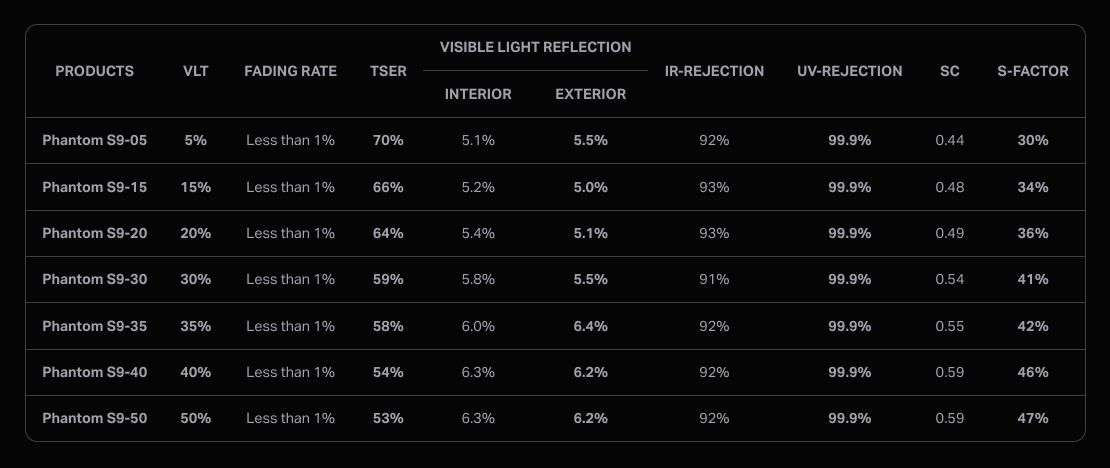
For example, XPEL’s published XR Plus specifications show different TSER and infrared results across its VLT range.
This means a lighter, high-performance ceramic tint can sometimes provide substantial solar protection without the visibility compromises associated with very dark film.
What VLT Should You Choose for Ceramic Tint?
VLT means Visible Light Transmission, the percentage of visible light that passes through the glass.
VLT | Appearance | Typical Consideration |
70% | Very light | Visibility and subtle solar protection |
50% | Light | Comfort with minimal darkening |
35% | Medium | Balanced appearance and privacy |
20% | Dark | Privacy and aggressive styling |
5% | Very dark | Maximum privacy where legal |
These are general film percentages. The final VLT can differ once film is installed over existing vehicle glass.
This is particularly important with factory privacy glass. Factory privacy glass may look dark, but that doesn’t mean it provides the same solar performance as a high-performance ceramic film.
For windshields and front windows, always check the applicable local regulations and measure the finished VLT rather than assuming the film’s nominal percentage is the final result.
Ceramic vs. Carbon Tint: Which Is Better?
If maximum heat and infrared rejection are the priority, ceramic tint is generally the stronger premium choice.
Carbon tint can still make sense for drivers who primarily want:
- Privacy
- Appearance
- UV protection
- Color stability
- Lower cost
Ceramic becomes more attractive when you prioritize:
- Heat rejection
- Infrared performance
- Optical clarity
- Large glass areas
- Panoramic roofs
- Premium vehicles
- Long-term cabin comfort
You don’t necessarily need the most expensive ceramic film, either. The best value depends on how much sunlight your vehicle receives, your climate, how long you drive, and your preferred VLT.
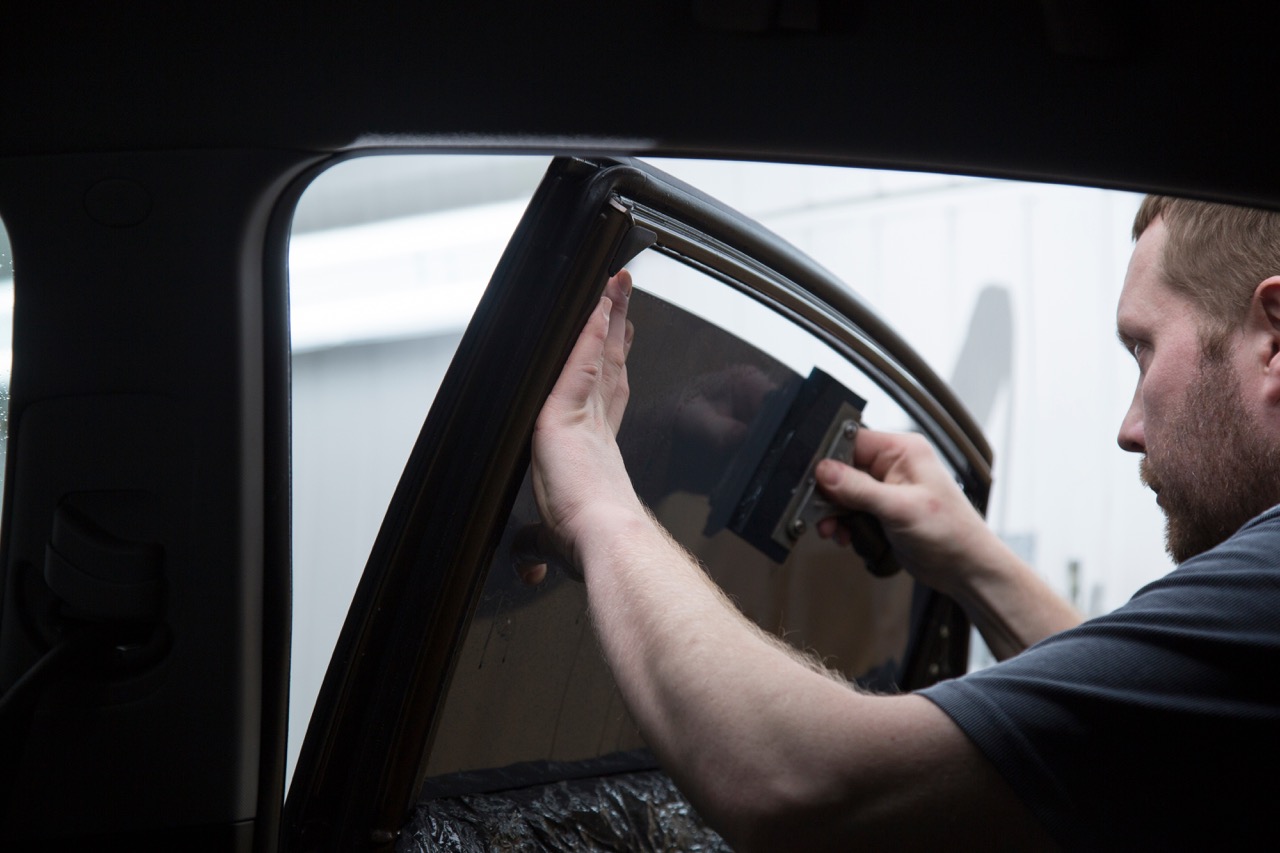
Is Professional Ceramic Tint Installation Important?
Yes.
Even one of the Best Ceramic Tint Brands can produce a poor result if installation is rushed or improperly performed.
Poor installation can cause:
- Dust contamination
- Creases
- Bubbles
- Peeling edges
- Uneven cuts
- Poor edge finishing
- Premature film failure
Professional installation also allows you to compare the exact film series, VLT, warranty, glass characteristics, and performance specifications before installation.
When getting a quote, don’t simply ask:
“How much is ceramic tint?”
Ask:
“Which exact ceramic film are you installing, what is its VLT, and what are its TSER, IRER, or infrared-rejection, UV, and warranty specifications?”
That question can reveal major differences between seemingly similar ceramic tint packages.
How to Choose the Best Ceramic Tint for Your Car
Use this five-step process before buying:
1. Decide what matters most
Is your priority heat rejection, privacy, appearance, clarity, UV protection, or price?
2. Compare the exact film
Don’t compare “3M vs XPEL” or “STEK vs LLumar” in isolation. Compare the actual product series.
3. Look at the right performance measurements
Prioritize TSER, appropriate infrared measurements, UV protection, and VLT rather than one isolated marketing percentage.
4. Consider your existing glass
Factory privacy glass, panoramic roofs, windshield glass, and different glass types can change the final result.
5. Choose the installer carefully
Installation quality affects appearance, longevity, and your overall experience with the film.
Frequently Asked Questions
What is the best ceramic tint brand in 2026?
There is no universal winner, but STEK, 3M, LLumar, XPEL, and SunTek are among the strongest brands to consider. The best choice depends on the exact film series, VLT, thermal performance, vehicle glass, and budget.
Which ceramic tint rejects the most heat?
High-performance films from brands such as XPEL, STEK, LLumar, and SunTek offer very strong thermal performance. However, the exact result depends on the film and VLT. XPEL’s published XR Plus data, for example, shows TSER varying across its available shades.
Is ceramic tint worth the extra money?
For drivers who prioritize heat rejection, infrared performance, clarity, UV protection, and long-term comfort, ceramic tint can be worth the additional cost over basic dyed film. If you’re primarily interested in appearance and privacy, a less expensive film may provide better value.
Is 35% ceramic tint better than 20%?
Neither is automatically better. 35% is lighter and generally provides better visibility, while 20% is darker and provides more privacy. Thermal performance depends on the specific film rather than darkness alone.
Does ceramic tint block UV rays?
Quality ceramic automotive films commonly provide around 99% or greater UV protection, depending on the product and test wavelength. For example, 3M Ceramic IR is rated up to 99.9% UV rejection, while LLumar IRX and XPEL PRIME films provide greater than or equal to 99% according to their published specifications.
What should I ask before buying ceramic tint?
Ask for the exact film series, VLT, TSER, infrared measurement, UV protection, warranty, and installation details. Those specifications are much more useful than simply being told that a film is “premium ceramic.”
Which Ceramic Tint Brand Is Best in 2026?
There isn’t one ceramic tint brand that’s objectively best for every vehicle.
STEK is a strong overall premium choice, particularly for buyers interested in advanced ceramic and graphene-infused ceramic technology.
3M remains an excellent established option with a broad product range.
LLumar stands out for clarity, heat rejection, and product variety.
XPEL is one of the strongest choices when maximum thermal performance is the priority.
The most important takeaway is simple:
Don’t choose ceramic tint based on the brand name alone. Compare the exact film, VLT, TSER, infrared performance, UV protection, warranty, and installation quality.
If you’re considering ceramic window tint for your vehicle, Rogue Auto Salon can help you compare the available film options based on your vehicle, preferred shade, heat-rejection goals, and budget.
The right ceramic tint shouldn’t simply make your windows darker; it should make your vehicle cooler, more comfortable, better protected, and easier to enjoy every day.