Autocare
XPEL XR Black vs XR Plus: Which Ceramic Tint Is Better?
Compare heat rejection, clarity, VLT, and value to choose the right XPEL ceramic tint.
If you’re comparing XPEL XR Black vs XR Plus, the better film depends on what matters most to you: heat rejection, appearance, optical clarity, UV protection, privacy, or price.
Both are premium XPEL ceramic window films, but XR Plus is designed for higher thermal performance, while XR Black combines strong ceramic performance with a deeper black appearance.
For vehicles exposed to intense sunlight, and especially Tesla Model 3s, Model Ys, SUVs, and vehicles with panoramic glass, the difference between ceramic tint films can matter more than simply choosing a darker tint percentage.
XPEL’s published specifications show that XR Plus generally delivers higher thermal performance than XR Black at comparable VLT levels, while both provide 99% UV rejection.
XPEL XR Black vs XR Plus: Quick Comparison
The simplest way to compare XPEL XR Black vs XR Plus is to look at their construction, measured performance, and intended use rather than judging the films only by how dark they appear.
Feature | XPEL PRIME XR Black | XPEL PRIME XR Plus |
Film construction | Nano-ceramic | Multi-layer nano-ceramic |
UV rejection | 99% | 99% |
IR rejection at 1025 nm | Up to 78%* | Up to 96%* |
IRER, 780–2500 nm | Up to 58%* | Up to 70%* |
Maximum listed TSER | Up to 66% | Up to 71% |
Appearance | Deeper black appearance | High-performance, clear-looking finish |
Signal interference | Non-metallic construction | Non-metallic construction |
Best for | Strong performance + darker styling/value | Maximum thermal performance |
Price positioning | Generally lower | Premium |
*Performance varies by VLT. XPEL’s specification sheet reports different results for individual shades, so the specific VLT being installed should be used when comparing films.
The Short Answer
XR Plus is the better ceramic tint if maximum heat rejection is your priority.
XR Black is the better choice if you want strong ceramic performance, a deeper black appearance, and potentially better value.
Neither film is automatically better for every driver. The right choice depends on your climate, vehicle, glass area, driving habits, desired darkness, and budget.
What Is XPEL XR Black?
XPEL PRIME XR Black is a premium ceramic automotive window film designed to combine privacy, styling, UV protection, and solar-energy rejection.
Its nano-ceramic construction provides infrared and solar-energy rejection without relying on metallic particles. That makes it useful for modern vehicles where owners want high-performance tint without concerns associated with metalized films.
XR Black also has a distinctive dark appearance. For drivers who want a traditional blacked-out look, this can be an important advantage.
According to XPEL’s published specifications, XR Black reaches up to 66% total solar energy rejection (TSER) depending on shade, with up to 58% infrared energy rejection (IRER) across the 780–2500 nm range. Its UV rejection is listed at 99%.
XR Black makes sense for drivers who want:
- Strong ceramic heat protection
- 99% UV rejection
- A darker, richer appearance
- Reduced glare
- More privacy
- Non-metallic film construction
- Premium ceramic performance without moving to XPEL’s highest-performance option
Importantly, XR Black is not a low-quality version of XR Plus. It is a premium ceramic film designed for a different balance of appearance, performance, and value.
What Is XPEL XR Plus?
XPEL PRIME XR Plus is XPEL’s higher-performance ceramic window film. Its multi-layer nano-ceramic construction is designed to provide stronger infrared and total solar-energy rejection while maintaining excellent optical clarity.
XPEL markets XR Plus as capable of rejecting up to 98% of infrared heat and 99% of harmful UV rays. Its specification sheet provides more detailed measurements, including up to 71% TSER, up to 70% IRER, and up to 96% IR rejection at 1025 nm, depending on the film shade.
These measurements are not interchangeable. IR rejection and IRER measure different things, while TSER measures the film’s total solar-energy performance.
XR Plus is therefore a strong choice for drivers who prioritize:
- Maximum available thermal performance
- Large areas of automotive glass
- Panoramic roofs and sunroofs
- High optical clarity
- Strong UV protection
- Reduced cabin heat
- Premium ceramic tint performance
XPEL also promotes XR Plus for panoramic and sunroof applications, where large areas of glass can allow significant solar energy into the cabin.
XPEL XR Black vs XR Plus: Heat Rejection
Heat rejection is one of the main reasons to choose XR Plus over XR Black. If you’re comparing ceramic films specifically for cabin comfort, it also helps to understand how much heat ceramic tint blocks and which measurements actually matter.
At comparable shades, XR Plus generally provides stronger thermal performance. XPEL’s published specifications show XR Plus reaching up to 71% TSER, compared with up to 66% for XR Black. XR Plus also reaches higher IRER and 1025 nm IR-rejection figures at comparable VLT levels.
The difference can become especially noticeable in vehicles with large areas of glass.
Consider a Tesla Model 3 or Model Y. These vehicles have large windshields, expansive side and rear glass, and, depending on the model, a panoramic glass roof. A vehicle with this much glass can benefit from a high-performance ceramic film.
However, you should not choose a tint solely because its infrared percentage sounds impressive.
Look at the complete performance profile:
- VLT
- TSER
- IRER
- UV rejection
- Optical clarity
- Glare reduction
- Glass type
- Installation quality
This is one of the most important differences between premium ceramic tint and generic dark window film.
Does Darker Tint Reject More Heat?
Not necessarily.
This is one of the biggest misconceptions about automotive window tint.
A 20% film is darker than a 50% film, but darkness alone does not tell you how effectively the film manages solar energy. If you’re unfamiliar with what different tint percentages actually look like, a window tint percentage guide can help explain the relationship between VLT, appearance, privacy, and visibility.
XPEL’s specifications demonstrate why VLT and thermal performance should be considered separately. XR Plus is available in multiple VLT levels, from very dark shades through much lighter options, while maintaining strong thermal performance.
That means you can choose a lighter ceramic tint for better visibility while still getting substantial heat rejection.
For example, a driver who wants a relatively bright cabin might choose a lighter XR Plus film rather than automatically choosing a very dark film to reduce heat.
Tint darkness controls visible-light transmission and appearance. Ceramic technology contributes to the film’s ability to manage solar energy.
XPEL XR Black vs XR Plus: UV Protection
There is much less separating these two films when it comes to UV protection.
Both XR Black and XR Plus provide 99% UV rejection according to XPEL’s published specifications.
UV protection matters for both occupants and the vehicle interior.
Protecting Occupants
Automotive glass does not provide identical protection against every type of solar radiation. High-quality window film adds another layer of UV protection for people who spend significant amounts of time inside a vehicle.
Protecting the Interior
UV exposure can contribute to fading and deterioration of interior materials over time. Window film can help reduce the amount of UV radiation reaching seats, trim, dashboards, and other interior surfaces.
So if you are choosing XR Black vs XR Plus specifically for UV protection, both are strong options. The bigger difference is their thermal performance.
XR Black vs XR Plus: Clarity and Appearance
Appearance is another factor that can influence the decision.
XR Black emphasizes a deeper, richer black appearance, making it a good fit for drivers who want a darker, more aggressive look.
XR Plus emphasizes high thermal performance and optical clarity. XPEL describes the film as providing clear outward visibility even at darker tint levels.
This can be particularly important for:
- Windshields
- Front side windows
- Panoramic roofs
- Vehicles driven frequently at night
- Luxury vehicles where optical quality matters
A darker film may provide more privacy, but that does not automatically make it the better driving film. This is especially important for drivers who are concerned about seeing through tinted windows at night, particularly when choosing darker VLT levels for front or side glass.
Which Is Better for a Tesla Model 3 or Model Y?
For a Tesla Model 3 or Model Y, XR Plus is generally the stronger choice when maximum heat rejection is the priority.
Tesla vehicles have unusually large glass areas, making thermal performance particularly relevant. The Model Y’s panoramic glass roof is especially important because occupants can receive direct overhead solar exposure.
A high-VLT ceramic film can be useful on glass areas where you want heat protection without significantly darkening the cabin.
For side and rear windows, your VLT decision should consider privacy, appearance, nighttime visibility, and local regulations.
Also remember that factory privacy glass is not the same as aftermarket heat-rejecting ceramic film. Dark-looking factory glass can provide privacy without delivering the same thermal performance as a premium ceramic film.
If you are tinting a Tesla, therefore, consider the film’s thermal technology and the final VLT separately.
Which XPEL Tint Is Better for Hot Climates?
If you live somewhere with intense summer heat, XR Plus has the stronger case.
Its higher published thermal performance makes it particularly attractive for vehicles that spend hours parked or driven in direct sunlight. XPEL specifically highlights XR Plus for sunroof and panoramic-roof applications.
That does not mean XR Black is ineffective. XR Black remains a high-performance ceramic option capable of substantial solar-energy rejection.
The difference is that XR Plus is designed for buyers who want to move further toward maximum thermal performance.
Is XPEL XR Plus Worth the Upgrade?
Yes, if the additional performance matches how you use your vehicle.
If you’re still deciding whether upgrading to premium ceramic film is worthwhile for your vehicle, a professional ceramic window tint installation can help you compare film performance, VLT, glass type, and installation requirements before choosing.
XR Plus makes the most sense when:
- You live in a very hot or sunny climate.
- Your vehicle has a panoramic roof or extensive glass.
- You frequently park outdoors.
- You spend long periods driving in direct sunlight.
- Interior heat is a major concern.
- You want maximum thermal performance.
- You prioritize optical clarity.
- You are willing to pay more for premium film.
XR Black can make more sense when:
- Budget is an important consideration.
- You want strong ceramic performance.
- You prefer a deeper black appearance.
- You prioritize privacy and styling.
- Your climate is moderate.
- You do not need the highest available thermal performance.
The important point is that XR Black is still a premium ceramic film. The upgrade to XR Plus is primarily about gaining additional thermal performance and its higher-end construction.
What VLT Should You Choose With XR Black or XR Plus?
Choosing the film is only half the decision. You also need to choose the visible light transmission (VLT).
Nominal VLT | Appearance | Privacy | Visibility | Typical use |
70% | Nearly clear | Low | Excellent | Heat protection with minimal appearance change |
50% | Light | Mild | Very good | Subtle appearance and glare reduction |
35% | Medium | Moderate | Good | Balanced daily-driving option |
20% | Dark | High | Reduced at night | Privacy-focused applications |
5% | Very dark | Maximum | Limited | Maximum privacy where legally permitted |
These are nominal tint levels, not necessarily the final measured VLT. XPEL’s published specifications show that measured VLT can differ from the film’s nominal designation.
The final appearance and VLT also depend on the vehicle’s existing glass. This is especially important with factory privacy glass, because adding film to already tinted glass changes the final visible-light transmission.
For front windows and windshields, always check the applicable local tint laws and measure the finished glass rather than assuming the film percentage is the final VLT.
Ceramic Tint vs Dyed or Metalized Tint
The advantages of XR Black and XR Plus become clearer when compared with conventional window film.
Dyed tint primarily provides appearance and privacy. It is generally less expensive but may not provide the same combination of thermal performance and long-term stability as premium ceramic film.
Metalized tint can provide heat and glare control, but metal-containing construction can create signal-interference concerns in some applications.
Ceramic tint uses non-metallic ceramic technology to combine heat rejection, UV protection, clarity, and signal compatibility.
If you’re also comparing ceramic with carbon film, see our guide to the difference between carbon and ceramic window tint for a broader breakdown of performance, appearance, and value.
For modern vehicles with wireless technology, ceramic film is often the more practical premium option.
Does Ceramic Tint Affect GPS, Bluetooth, or Phone Signals?
XPEL states that PRIME XR Plus does not interfere with radio, cellular, or Bluetooth signals.
That makes non-metallic ceramic film particularly attractive for technology-heavy vehicles such as Tesla.
Professional installation still matters. Film should be correctly fitted around glass edges, defroster areas, sensors, and other vehicle-specific components.
XPEL XR Black vs XR Plus: Which One Should You Buy?
The answer is straightforward:
The answer is straightforward:
Choose XPEL XR Plus if you want maximum thermal performance and are willing to pay more for it.
Choose XPEL XR Black if you want premium ceramic heat rejection, 99% UV protection, a deeper appearance, and better value.
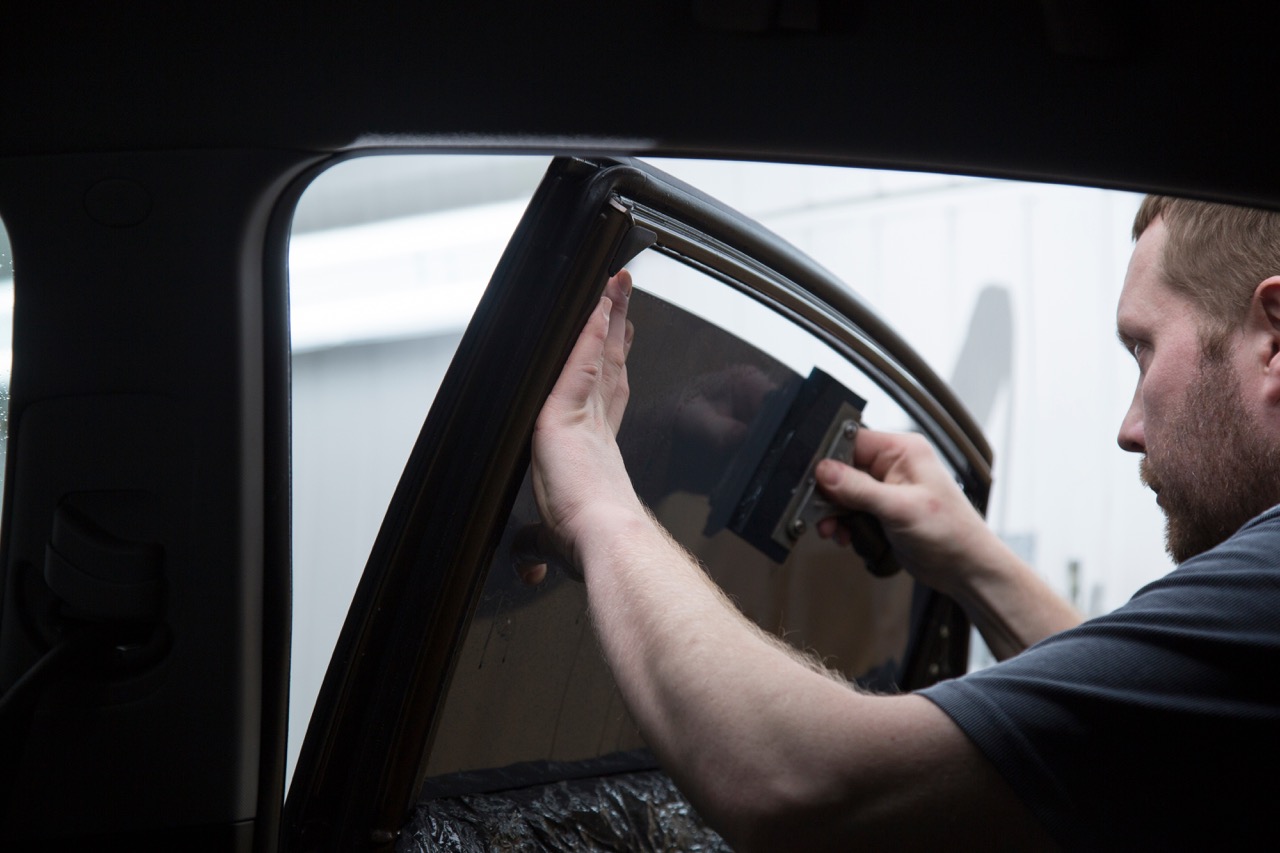
If you’re unsure which film or VLT is right for your vehicle, a professional ceramic tint installation gives you the opportunity to compare the available films and evaluate the existing glass before installation.
Frequently Asked Questions
Is XR Plus better than XR Black?
Yes, if maximum heat rejection is your priority. XPEL’s published specifications show higher maximum TSER and stronger infrared-rejection performance for XR Plus. XR Black remains a premium ceramic option for drivers who prioritize value and a deeper appearance.
Which XPEL tint blocks the most heat?
XR Plus is XPEL’s higher-performance option. XPEL markets PRIME XR Plus as capable of rejecting up to 98% of infrared heat, while its specification sheet reports up to 71% TSER and up to 70% IRER depending on VLT.
Does XR Black have 99% UV protection?
Yes. XPEL’s published specification sheet lists 99% UV rejection for XR Black across its listed shades.
Is XR Plus worth it for a Tesla?
It can be, particularly for Model 3 and Model Y owners dealing with strong sunlight, large glass areas, or panoramic roofs. The additional thermal performance can make XR Plus attractive when cabin heat is a major concern.
Is darker tint better than lighter ceramic tint?
No. Tint darkness and heat rejection are not the same thing. A lighter, high-performance ceramic film can reject substantial solar energy without the visibility compromises associated with very dark film.
What is the best ceramic tint percentage?
There is no single best percentage for every vehicle or window. 35% can provide a balance of appearance and privacy, while 50% or 70% provides a lighter cabin and stronger visibility. 20% or darker is more privacy-focused and can make nighttime visibility more challenging.
Always check the final VLT and applicable local laws before selecting film for front windows or the windshield.
Upgrade Your Vehicle With the Right Ceramic Tint
Choosing between XPEL XR Black vs XR Plus should not come down to a single marketing number. The better film is the one that matches your priorities.
If you want strong ceramic performance and a darker aesthetic, XR Black is an excellent option. If you want maximum thermal performance and high optical clarity, XR Plus is the more compelling upgrade.
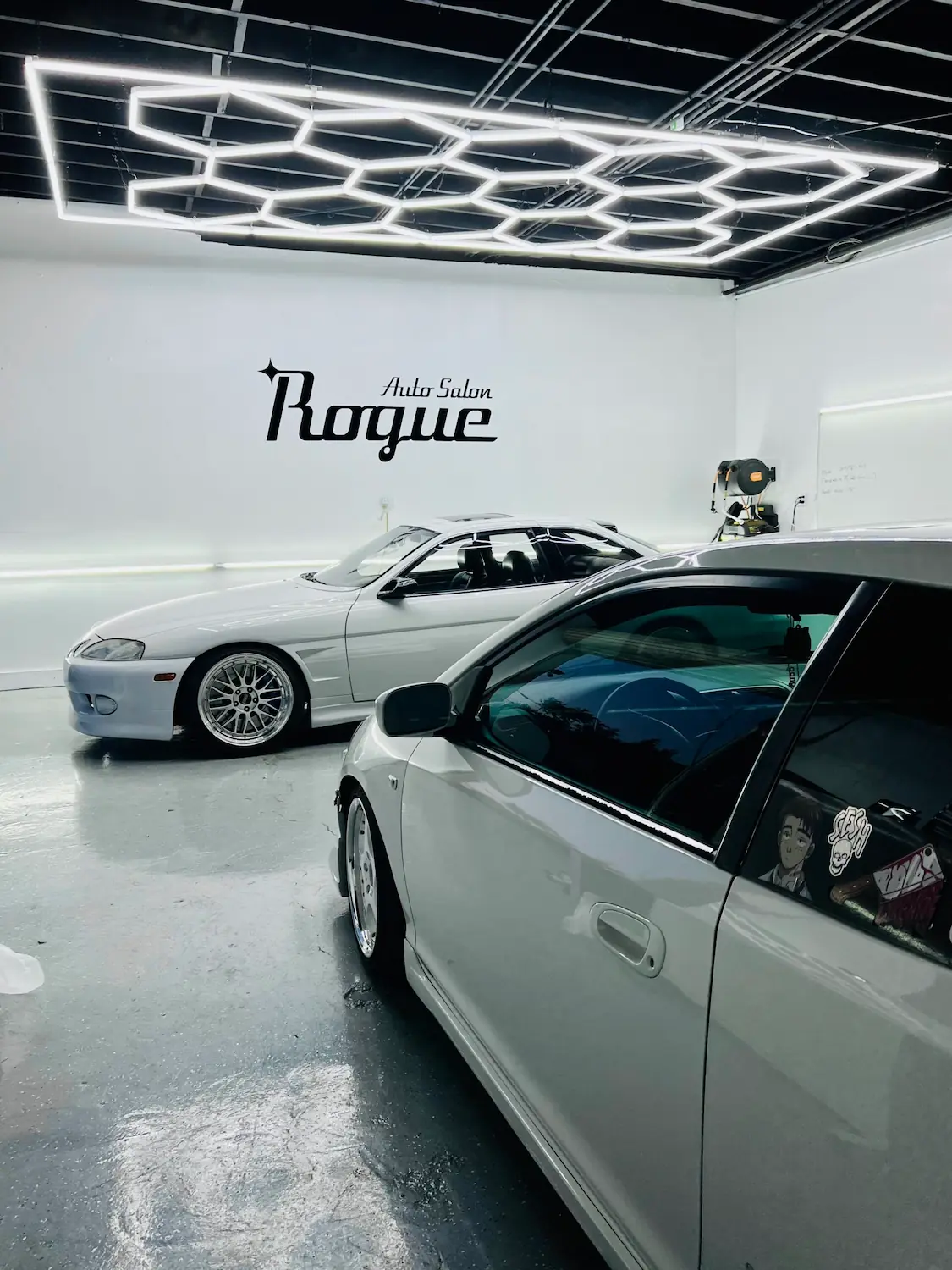
If you are considering ceramic window tint for a Tesla, daily driver, truck, SUV, or luxury vehicle, contact Rogue Auto Salon for professional ceramic window tint and compare the right film and shade for your vehicle.
A professional evaluation can help determine the appropriate VLT, compare XR Black and XR Plus, and account for factory glass, privacy requirements, visibility, and heat-rejection goals before installation.