Autocare
California Window Tint Ticket Cost (2026 Guide)
What California drivers need to know about tint ticket costs, fix-it violations, VLT rules, and avoiding penalties.
If you are researching California window tint ticket costs because you received a citation, or because you want to avoid one, the first thing to know is that the commonly quoted “$25 tint ticket” is not necessarily the total amount you will owe.
If your window tint violation is marked as a correctable or “fix-it” violation, California Courts says you can generally correct the problem, provide proof of correction, and pay a $25 fee for each correctable violation.
If the violation is not eligible for correction, you do not provide proof by the deadline, or your citation includes other violations, the amount due can be higher. Your specific citation and the court handling your case control the actual amount and process.
Quick answer:
If your California window tint violation is eligible for correction, you can generally resolve that portion of the citation by fixing the violation, obtaining the required proof of correction, and paying the $25 proof-of-correction fee.
Do not assume every tint citation automatically costs $25; check whether your citation is marked correctable and follow the instructions from the court listed on your ticket.
California Window Tint Ticket Cost in 2026: How Much Is It?
There is no single California-wide total price for every window tint citation.
If the violation is marked as correctable, California Courts states that a fix-it ticket can generally be resolved by correcting the problem, providing proof of correction, and paying a $25 fee for each correctable violation.
That $25 amount is a proof-of-correction fee, not a guarantee that every tint citation will have a total balance of exactly $25.
The amount you ultimately owe can depend on:
- Whether the tint violation is marked correctable
- Whether the violation is the only charge on the citation
- Whether you correct the violation by the required deadline
- The bail or fine listed by the court
- Whether additional violations are included
- Whether you fail to respond to the citation
California Courts specifically advises drivers to contact the court listed on the citation for information about the applicable fines, bail, and procedures.
Is a California Tint Ticket a Fix-It Ticket?
It can be.
If the citation identifies the window-tint violation as correctable, you can generally fix the violation, obtain the required certification or proof of correction, and submit it to the appropriate court with the required $25 fee. California Courts explains that the citation indicates whether a violation is eligible for correction.
The important word is “can.” Do not assume that every window-tint citation is automatically a fix-it ticket. Check your citation and follow the instructions from the court handling your case.
If correcting the violation means removing the existing film, our guide on how to remove tint from a car window without damaging the glass explains the process and the risks of DIY removal.
What Makes Window Tint Illegal in California?
California’s primary restrictions on aftermarket window materials are found in California Vehicle Code §26708. The law generally prohibits materials that obstruct or reduce the driver’s clear view, while providing specific exceptions for certain windows and qualifying materials.
For someone who has received a tint citation, the most important point is that California does not treat every piece of vehicle glass the same way.
The rules differ depending on whether the material is installed on:
- The windshield
- The front side windows
- Side windows behind the driver
- The rear window
If you are researching the complete California tint requirements, including legal VLT, windshield restrictions, medical exceptions, and rear-window rules, see our dedicated California Window Tint Laws guide.
For this article, the important question is simpler: if you have already received a citation, was the violation marked correctable, and what do you need to do to resolve it?
California Window Tint Laws for Front Side Windows
Front side windows are one of the most important areas to pay attention to if you are trying to avoid a California tint citation.
California Vehicle Code §26708 contains specific restrictions and exceptions for material applied to the front side windows. One provision allows qualifying clear, colorless, transparent material when the material and completed glazing meet specified requirements, including an 88% minimum visible light transmittance for the material and compliance with applicable federal glazing requirements.
Because California’s tint rules are more nuanced than simply choosing a film labeled “70%,” you should not assume that the percentage printed on a film package represents the final legal VLT of the completed window.
If you are unfamiliar with VLT, our guide to different window tint percentages explains what common tint levels mean and how they affect appearance and visibility.
What About Rear Windows?
California’s rules are generally more permissive for side windows behind the driver.
Vehicle Code §26708 specifically exempts side windows to the rear of the driver from the general prohibition in subdivision (a). The statute also provides an exception for rear windows when the vehicle has outside mirrors on both the left and right sides that provide the required rearward view.
This is why California vehicles can commonly have darker rear glass while using much lighter material on the front windows.
The exact installation should still be evaluated under the current California requirements rather than assuming that any dark rear film is automatically compliant.
California Window Tint Windshield Rules
The windshield is another area where California drivers frequently misunderstand the rules.
California Vehicle Code §26708 permits transparent material on the topmost portion of the windshield when specific conditions are met.
Among other requirements, the bottom edge of the material must be at least 29 inches above the undepressed driver’s seat, the material cannot be red or amber, and it cannot create excessive glare or reflection.
In practical terms, California-compliant windshield tint is generally limited to an appropriate upper strip rather than a dark film covering the entire windshield.
If your goal is reducing heat while maintaining visibility, ask your installer about a light or clear film that is specifically appropriate for the windshield and the applicable California requirements.
If you are considering heat-rejecting film on the windshield, our guide to clear ceramic tint on windshields explains the potential benefits, visibility considerations, and installation requirements in more detail.
How Much Can a Tint Ticket Actually Cost?
There are three different amounts drivers often confuse when researching a California tint ticket.
1. The $25 proof-of-correction fee
If the violation is eligible for correction, California Courts says you can generally resolve the correctable violation by fixing the problem, providing proof of correction, and paying a $25 fee for each correctable violation.
2. The full bail or fine
If you do not use the proof-of-correction process, the full amount listed by the court may be due instead. Court materials explain that the $25 amount is a reduced amount available when valid proof of correction is submitted.
3. Additional consequences for ignoring the citation
Ignoring a citation can create additional problems. California Courts states that failing to respond can result in a civil assessment of up to $100, a failure-to-appear issue, collection activity, and other consequences.
Bottom line: If your tint citation is correctable, do not treat “$25” as the entire story. Correct the violation, obtain the required proof, and resolve the citation by the deadline listed by the court.
How to Fix a California Window Tint Ticket
If your citation is marked correctable, the process generally looks like this:
Step 1: Read Your Citation Carefully
Look for:
- The Vehicle Code section cited
- Whether the violation is marked correctable
- Your correction or appearance deadline
- The court handling the citation
- Instructions for obtaining proof of correction
Do not assume the procedure is identical in every California court.
Step 2: Correct the Tint Violation
If your tint does not comply with the requirement identified on the citation, correcting it could mean:
- Removing the existing film
- Replacing it with a compliant film
- Installing a lighter ceramic film
- Correcting another condition identified by the officer
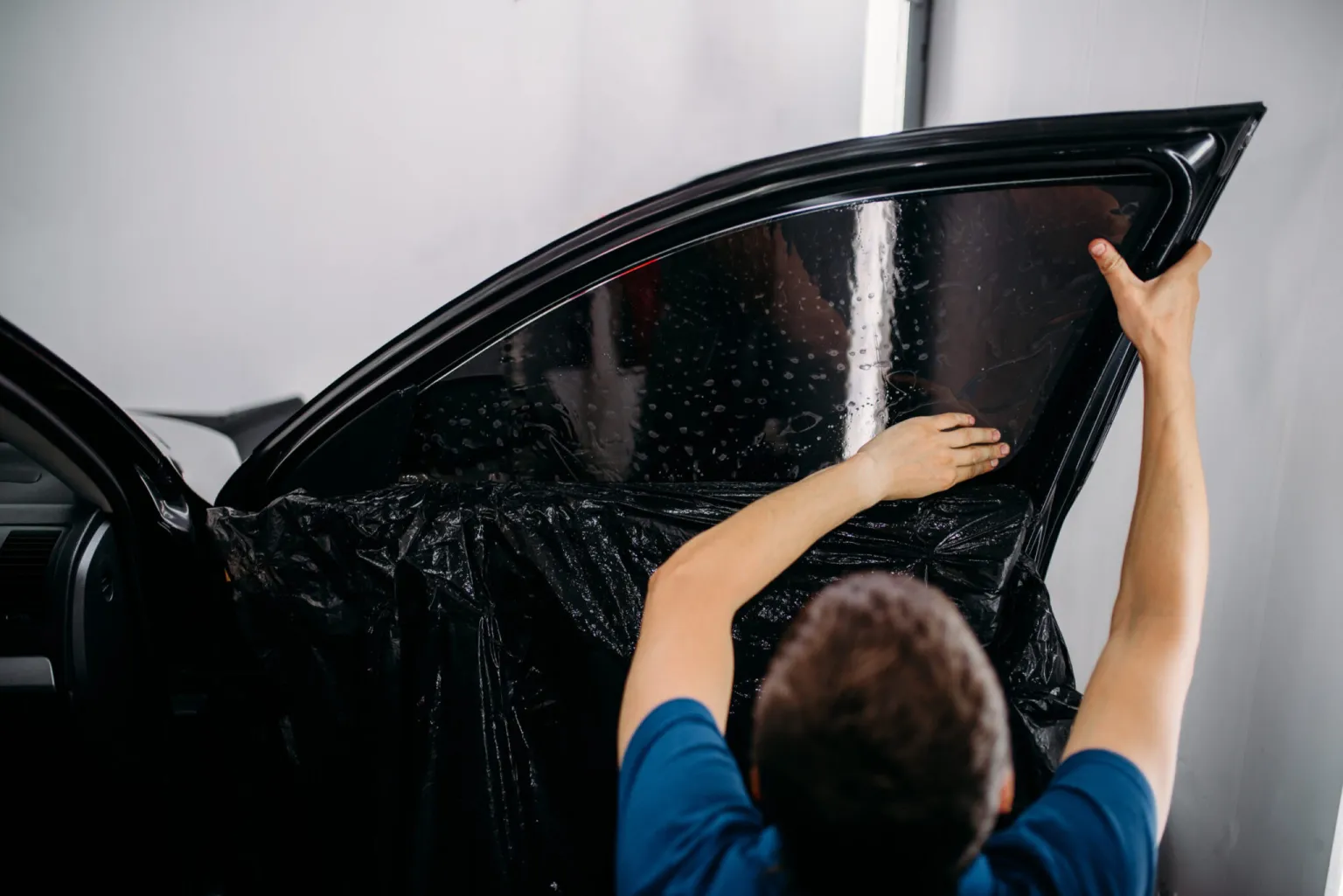
If you want to retain heat rejection, replacing dark or non-compliant film with an appropriate ceramic film may allow you to maintain solar protection without repeating the same compliance problem.
Step 3: Obtain Proof of Correction
For a correctable violation, you generally need an authorized person to verify the correction and complete the required certificate or documentation. California Courts states that a law-enforcement officer or an authorized inspection/installation station agent may sign the correction, depending on the citation and violation.
Some agencies or inspection providers may charge their own verification fee, so confirm the cost before making the trip.
Step 4: Submit the Proof of Correction
Return the signed proof of correction or required documentation to the court listed on your citation by the deadline.
Step 5: Pay the Required Correction Fee
The standard proof-of-correction fee is $25 per correctable violation. Keep copies of the documentation and payment for your records.

Can You Get a California Tint Ticket Dismissed?
A correctable window-tint citation can generally be dismissed after you correct the violation, provide the required proof of correction, and pay the applicable correction fee.
California Courts explains that eligible correctable violations are dismissed when the required proof and fee are presented to the court.
However, dismissal is not automatic simply because you remove the tint.
You must follow the instructions for your specific citation and court, including submitting the required proof and fee by the applicable deadline.
If the citation is not marked correctable, includes additional violations, or involves other circumstances, the process may be different. Contact the court listed on your citation if you are unsure how your case should be handled.
Can You Avoid a California Window Tint Ticket With Ceramic Film?
Ceramic tint can help you reduce heat without relying on an extremely dark film, but ceramic technology does not automatically make a window-tint installation legal.
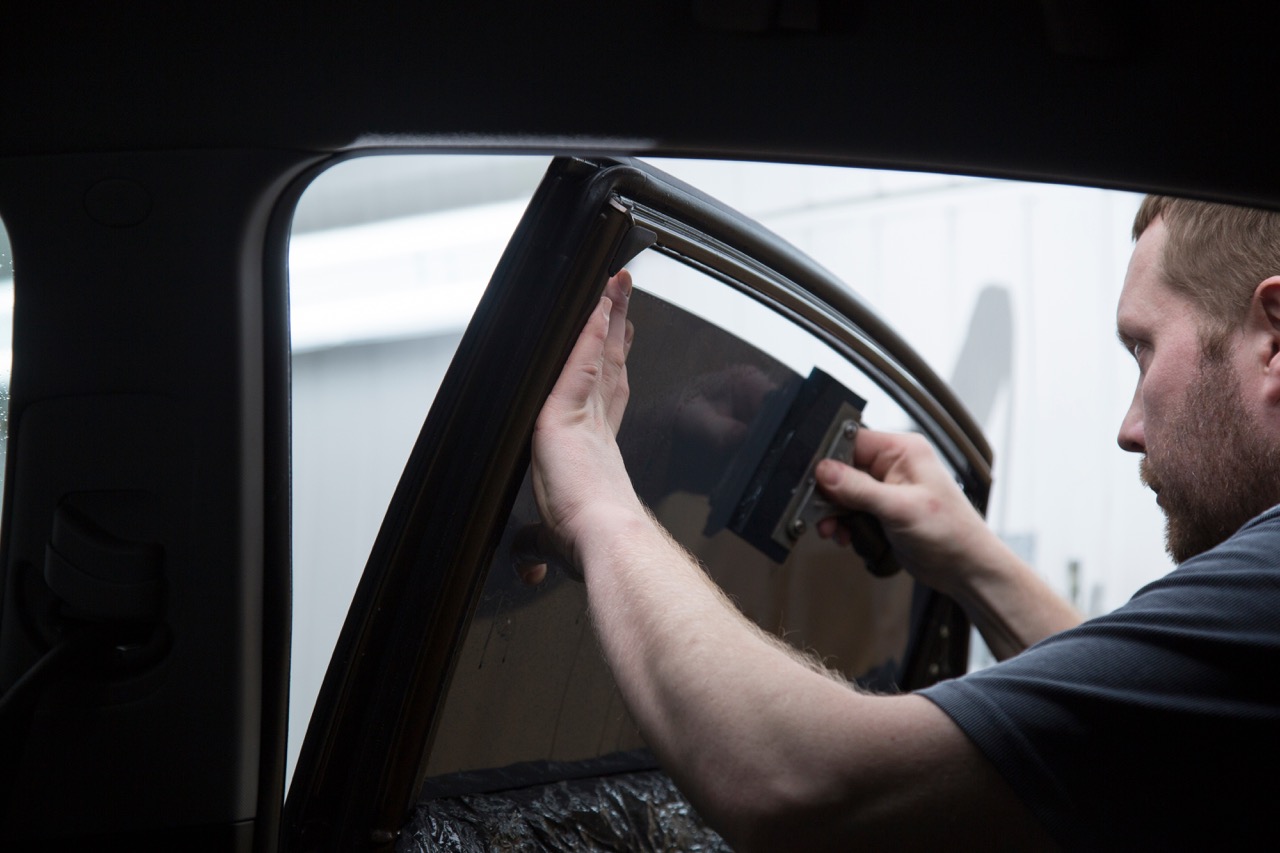
A professional ceramic window tint installation can help you select the film based on both its thermal performance and the requirements that apply to each window.
You can have:
- Light ceramic tint
- Medium ceramic tint
- Dark ceramic tint
- Nearly clear ceramic film
A lighter ceramic film can provide significant solar-energy rejection while transmitting substantially more visible light than a dark film.
For California drivers, this makes ceramic film useful when the goal is to improve cabin comfort while keeping the installation within the requirements that apply to the vehicle’s windows.
Why Ceramic Tint Makes Sense in California
High-quality ceramic films are designed to reduce solar heat and UV exposure while maintaining optical clarity.
Premium films such as XPEL PRIME XR Plus are designed for high thermal performance, while XPEL PRIME XR Black combines strong ceramic performance with a deeper appearance and different price positioning.
The important point is that neither film’s ceramic construction automatically makes every VLT legal on every window. The film should be selected based on both performance and the requirements that apply to the finished glass.
If you’re still deciding whether the added performance of ceramic film is worth the investment, our guide to whether ceramic window tint is worth it breaks down the benefits, costs, and long-term value.
Best California Window Tint Approach for Legal Heat Rejection
If you’re trying to balance California requirements, privacy, visibility, and heat rejection, a practical strategy is to treat each area of glass separately:
Window | Common approach | Primary goal |
Windshield | Compliant upper strip or qualifying clear film | Heat/glare management |
Front sides | Light or qualifying film based on applicable requirements | Compliance + heat rejection |
Rear sides | Darker film where permitted | Privacy + heat rejection |
Rear window | Darker film where permitted | Privacy + solar control |
Panoramic roof | Light ceramic where appropriate | Reduce solar load |
There is no single tint percentage that is automatically the best choice for every California vehicle. The appropriate film depends on the glass, installation, vehicle, and applicable legal requirements.
For Tesla Model 3 and Model Y owners, the roof can be particularly important because of the vehicles’ extensive glass area.
If you’re comparing XPEL XR Black vs XR Plus, the decision also should not be based solely on darkness. XR Black emphasizes strong ceramic performance and a deeper appearance, while XR Plus is positioned as the higher-performance option for thermal performance and optical clarity.
What If You Already Have 20%, 35% or 50% Tint?
If you’re concerned about receiving a California tint ticket, don’t judge legality by appearance alone.
The percentage printed on a film is not necessarily the final VLT of the completed window. Existing factory glass also affects the final result.
A professional tint shop can measure the glass with an appropriate VLT meter before installation and verify the finished glazing after the film is applied.
This is particularly important for vehicles with factory privacy glass.
For example, adding a 20% film to already-dark factory glass can produce a much darker final window than the film’s 20% rating might suggest.
The same principle applies to lighter films: the final glass-and-film combination should be evaluated rather than assuming the film’s advertised percentage is the legal measurement.
How to Avoid a California Window Tint Ticket in the First Place
The simplest strategy is to address compliance before the film goes onto the vehicle.
1. Measure the factory glass
Don’t guess. Existing glass can affect the final VLT.
2. Choose the film based on the finished glass
The goal is to evaluate the completed window, not simply the number printed on the film box.
3. Use a reputable installer
Ask whether the installer measures the glass, understands California requirements, and provides any documentation required for the specific installation.
4. Avoid excessively reflective film
California law places restrictions on material that reflects sunlight or headlight glare into the eyes of occupants of other vehicles.
5. Avoid prohibited colors or materials
California Vehicle Code §26708 places specific restrictions on materials and colors in the windshield strip area and other prohibited applications.
6. Keep your documentation
If your installation qualifies under a statutory exception, keep the required certification or documentation in the vehicle.
7. Don’t assume a dark rear means you need dark front windows
You can often achieve a darker appearance toward the rear while using a much lighter configuration on the front, depending on the vehicle and applicable requirements.
California Window Tint Ticket Cost: Frequently Asked Questions
How much is a California window tint ticket in 2026?
If the window-tint violation is eligible for correction, California Courts states that you can generally resolve the correctable violation by providing proof of correction and paying a $25 fee per correctable violation.
The total amount can be higher if the violation is not corrected, is not eligible for correction, or the citation includes additional violations.
Is a tint ticket a fix-it ticket in California?
A window-tint citation can be a correctable or fix-it violation, but you should not assume that every citation is correctable. Check your citation to see whether the violation is marked as correctable and follow the instructions from the court handling your case.
What tint percentage is legal in California?
California does not have a single simple tint percentage that applies to every window and every installation. Vehicle Code §26708 contains different rules and exceptions for the windshield, front side windows, rear side windows, and rear window.
For that reason, do not rely only on the percentage printed on a film. The applicable requirements and the final glass-and-film combination should be evaluated for the specific vehicle.
Is 35% tint legal in California?
You should not assume that 35% tint is legal on a front window in California. The legality of an installation depends on the window, the material, the completed glazing, and the applicable statutory requirements.
Vehicle Code §26708 contains specific provisions governing front side windows and qualifying transparent materials.
Can I use 5% tint on my rear windows?
California law is generally more permissive for side windows behind the driver, and Vehicle Code §26708 specifically exempts those windows from the general prohibition in subdivision (a). The rear window also has an exception when the vehicle has qualifying outside mirrors on both sides.
However, the complete installation should still be evaluated for compliance with all applicable requirements.
Can I get darker front tint with a medical exemption?
California law contains specific provisions for certain medical or visual conditions. The requirements are more detailed than simply having a doctor’s note.
Vehicle Code §26708 allows certain sun-screening devices when the statutory conditions are met, and it separately addresses qualifying clear, colorless UV-protective material.
If you believe you qualify for an exception, review the current statutory requirements and keep the required documentation in the vehicle.
Should I remove my tint after receiving a ticket?
If your citation requires correction, you should correct the specific violation according to the instructions on your ticket. If you want to maintain heat and UV protection, replacing non-compliant film with an appropriate ceramic film may be an option instead of leaving the vehicle completely untinted.
Can a California tint ticket be dismissed?
If the violation is marked correctable, California Courts state that the violation can generally be dismissed after the required correction, proof of correction, and correction fee are submitted to the court.
Dismissal is not automatic simply because the tint is removed. You must complete the correction process required by your citation and court.
Final Takeaway: Don't Let a $25 Fix-It Ticket Become a Bigger Problem
The biggest misconception about California window tint tickets is that every citation simply costs “$25.”
The $25 amount is the proof-of-correction fee for an eligible correctable violation. If you correct the violation, provide the required proof, and meet the court’s deadline, that can resolve the correctable portion of the citation. If the violation is not correctable, additional violations are involved, or you fail to respond, the amount and consequences can be substantially different.
The best approach is to prevent the problem before installation.
Have the existing glass evaluated, choose film based on the requirements that apply to the finished glass, and use a reputable installer who understands California’s window-film rules.
If you’ve already received a tint ticket, don’t ignore it. Check whether the citation is marked correctable, correct the violation before the deadline, obtain the required verification, and submit the proof of correction and fee to the appropriate court.
If you’re replacing non-compliant tint, you don’t necessarily have to give up heat protection. A professionally installed ceramic film can provide substantial solar and UV protection while allowing you to choose a configuration appropriate for your vehicle and California requirements.
Need help choosing the right film?
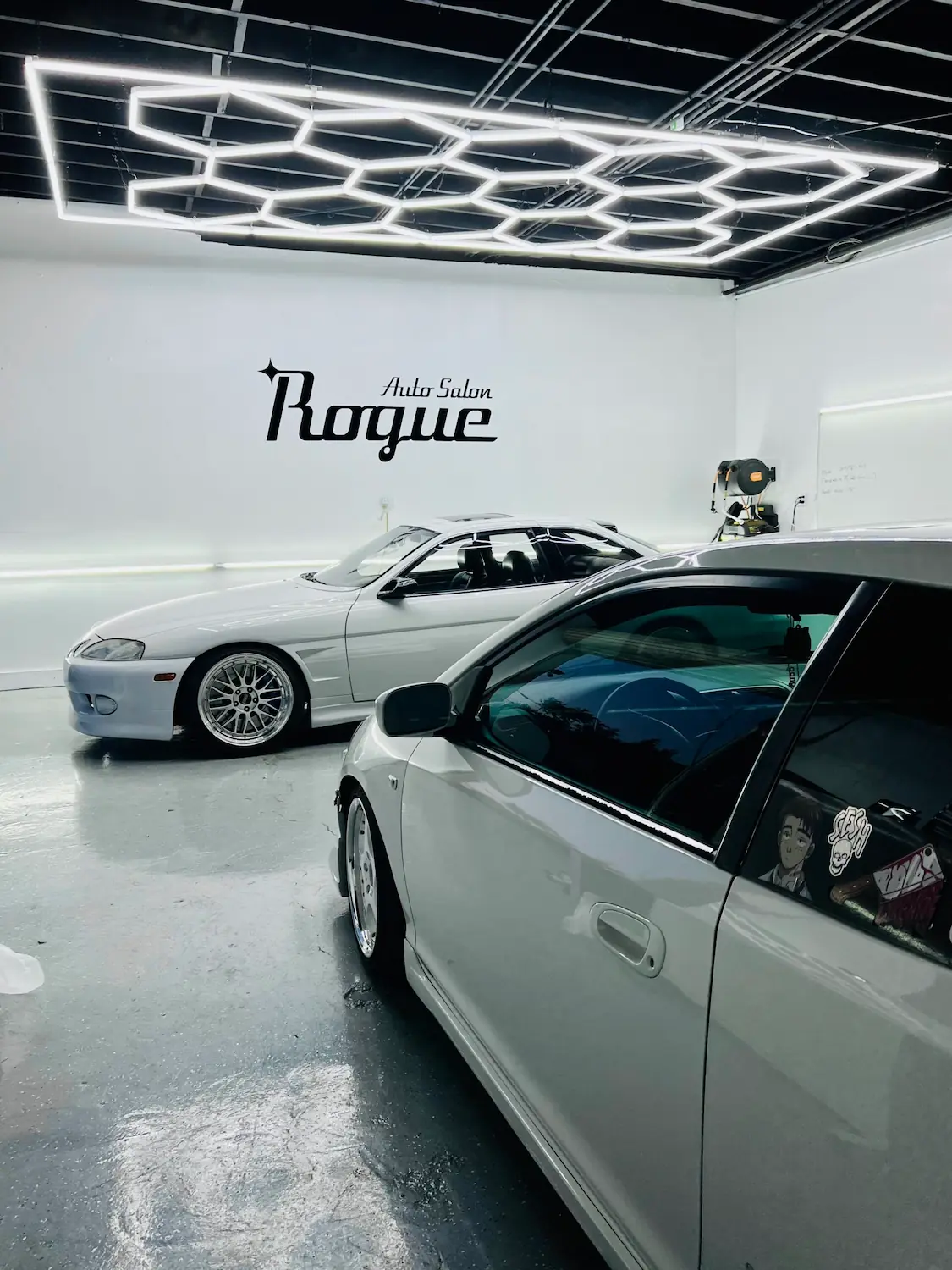
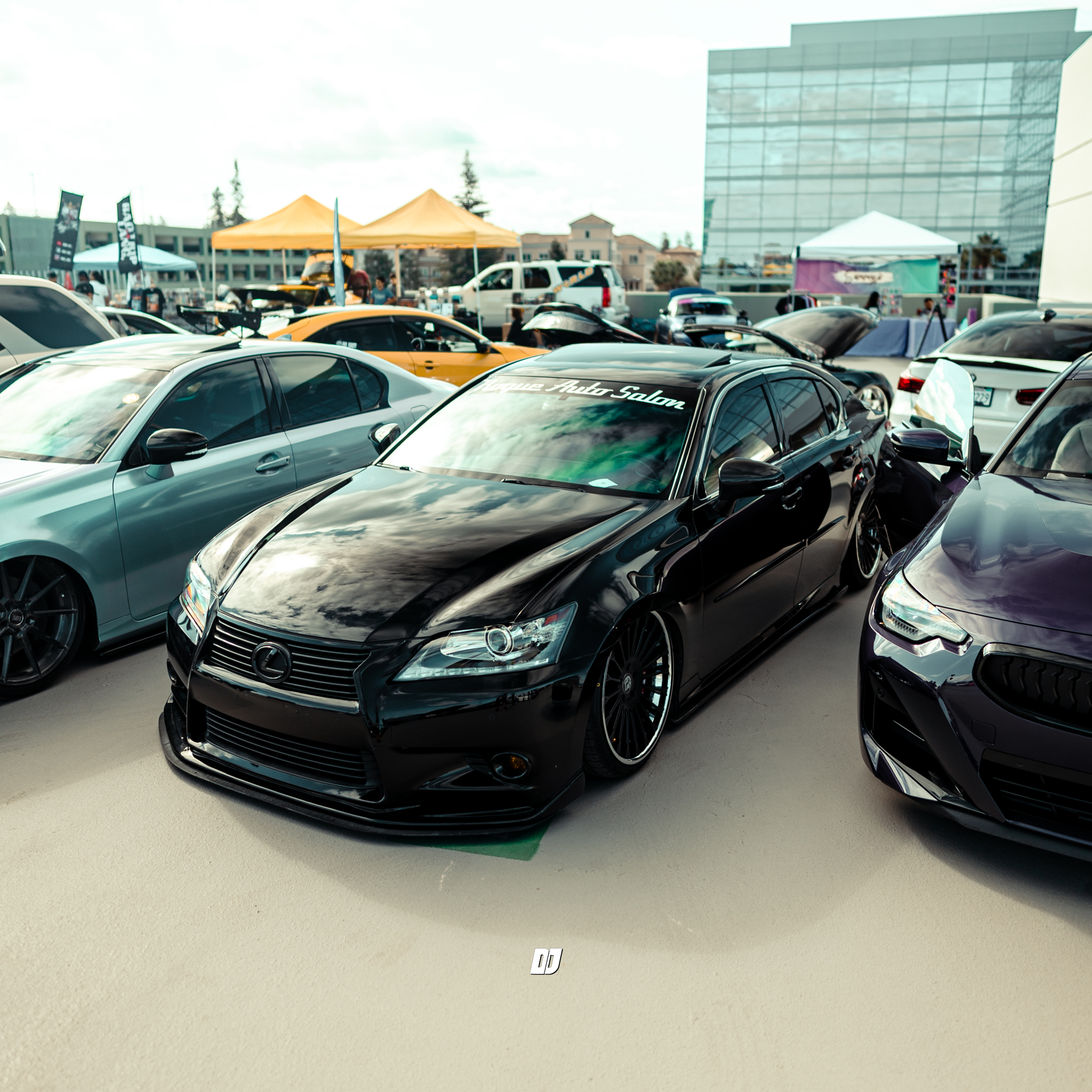
Rogue Auto Salon can evaluate your existing glass, explain the available ceramic film options, and help you choose a configuration based on your vehicle, desired appearance, privacy, visibility, and heat-rejection goals.