Autocare
Ceramic Tint vs Dyed Tint: Complete Comparison
Ceramic vs dyed tint: heat, UV protection, cost, durability, and performance compared.
When comparing Ceramic Tint vs Dyed Tint, the biggest difference isn’t simply how dark the windows look. The film type affects heat rejection, UV protection, glare reduction, optical clarity, durability, and long-term value.
Dyed tint is the more affordable choice for basic privacy and appearance, while ceramic tint is the premium option for stronger solar performance, clarity, and longevity.
If you’re deciding which automotive window tint is right for your vehicle, the choice comes down to your priorities. Dyed film can make sense when keeping the initial cost low is most important.
Ceramic is generally the better investment if you want a cooler cabin, high UV protection, better long-term colour stability, and premium performance without relying on an extremely dark shade.
Ceramic Tint vs Dyed Tint: Quick Answer
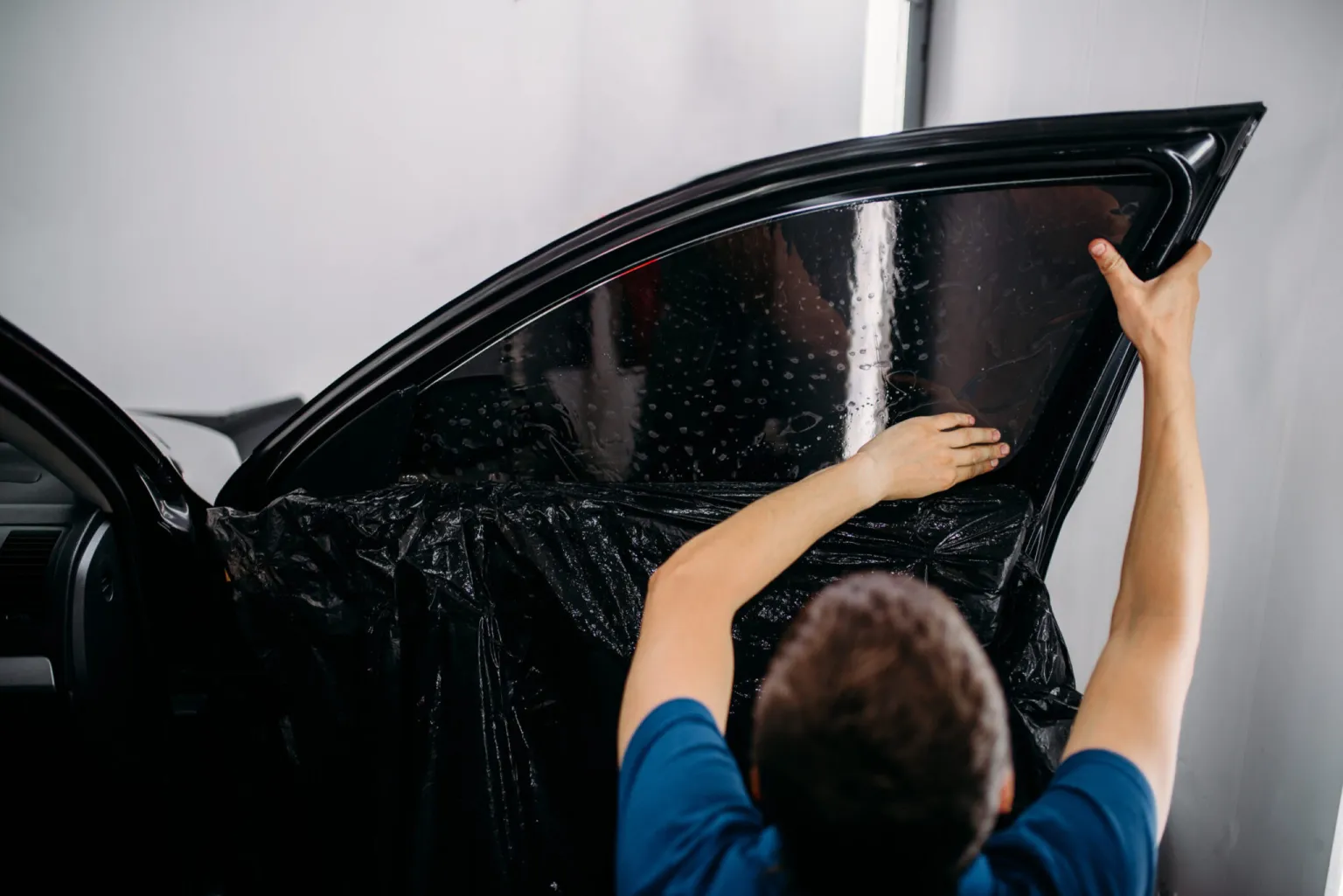
Ceramic tint is the better overall performer, while dyed tint is the better budget option.
Feature | Dyed Tint | Ceramic Tint |
Upfront cost | Lower | Higher |
Heat rejection | Basic to moderate | High, depending on film |
Infrared performance | Limited compared with premium ceramic | High, depending on film |
UV protection | Varies by product | Typically excellent |
Glare reduction | Good | Excellent |
Colour stability | More prone to fading | Excellent on quality films |
Optical clarity | Good | Excellent |
Signal interference | None | None; non-metallic |
Long-term value | Best for lower initial cost | Best for long-term performance |
Best for | Privacy, appearance, budget | Heat, comfort, protection, longevity |
The important qualification is that not every film within a category performs identically. Always compare the manufacturer’s specifications for the exact film, shade, and glass combination.
The Short Answer
Ceramic tint is the better choice if maximum heat rejection, UV protection, clarity, and long-term performance are your priorities.
Dyed tint is the better choice if you mainly want privacy, glare reduction, a darker appearance, and a lower upfront cost.
Neither film is automatically better for every driver. The right choice depends on your climate, how often you drive or park in direct sunlight, desired VLT/darkness, vehicle usage, how long you plan to keep the car, and budget.
What Is Dyed Window Tint?
Dyed window tint is one of the most basic forms of automotive window film. It uses a dyed layer to create a darker appearance by absorbing visible light.
Its primary benefits are:
- Lower upfront cost
- Increased privacy
- Reduced glare
- Darker, cleaner appearance
- Non-metallic construction
- No typical interference with GPS, mobile, Bluetooth, or radio signals
For drivers mainly interested in appearance and privacy, dyed tint can be a practical choice.
The trade-off is performance and longevity. Traditional dyed films are generally more susceptible to colour fading and degradation after prolonged exposure to sunlight. Depending on film quality, installation, climate, and exposure, lower-quality dyed film may eventually develop fading, purple discoloration, bubbling, peeling, or adhesive failure.
That doesn’t mean every dyed film lasts only a few years. Film quality matters. For that reason, a manufacturer’s warranty and specifications are more useful than assuming every dyed film has the same lifespan.
Another important point: dyed film isn’t completely incapable of rejecting solar energy. The actual performance varies between products. For example, manufacturer data for some colour-stable dyed films shows meaningful total solar energy rejection. The right comparison is therefore the specific film’s TSER and other published specifications, not simply the word “dyed.”
What Is Ceramic Window Tint?
Ceramic window tint is a premium automotive window film that incorporates ceramic particles into its construction.
Unlike dyed film, ceramic technology is engineered to provide strong solar and infrared performance without relying primarily on a dark appearance. Premium ceramic films can provide high UV protection, substantial infrared rejection, glare reduction, and excellent optical clarity.
For example, 3M’s Ceramic IR Series is rated by 3M for up to 66% total solar energy rejection, up to 95% infrared rejection, and up to 99.9% UV rejection, depending on the product and test conditions. The film is also metal-free and designed not to interfere with electronics, GPS, satellite radio, mobile devices, or 5G.
That illustrates an important buying principle:
“Ceramic” is a film technology, not a universal performance rating.
A ceramic film’s actual results depend on the manufacturer, product series, VLT, glass, and test method. When comparing products, look at the technical specification sheet rather than relying solely on a sales label such as “premium ceramic.”
Ceramic Tint vs Dyed Tint: Heat Rejection
Heat rejection is one of the biggest reasons drivers upgrade from dyed to ceramic tint.
Dyed film primarily changes how much visible light enters the cabin and can provide some solar-energy reduction. Premium ceramic films are engineered for substantially stronger solar and infrared performance.
This can make ceramic particularly valuable if your vehicle:
- Sits outside in direct sunlight
- Is driven frequently during hot weather
- Has a dark interior
- Is used for long commutes
- Gets uncomfortable quickly when parked
- Needs strong heat control without extremely dark glass
What Is TSER?
One of the most important specifications to understand when comparing window films is Total Solar Energy Rejected (TSER).
TSER measures the percentage of total solar energy rejected by the glass-and-film combination under the applicable test conditions. It gives you a broader picture of solar performance than an infrared-only number.
That’s important because marketing claims such as “90% IR rejection” don’t tell the entire story.
IR rejection, IRER, selective IR rejection, and TSER are different measurements. Two films can advertise impressive infrared numbers while producing different overall solar-energy results.
For a meaningful comparison, look at:
- VLT
- TSER
- IR or IRER specifications
- UV rejection
- The manufacturer’s testing conditions
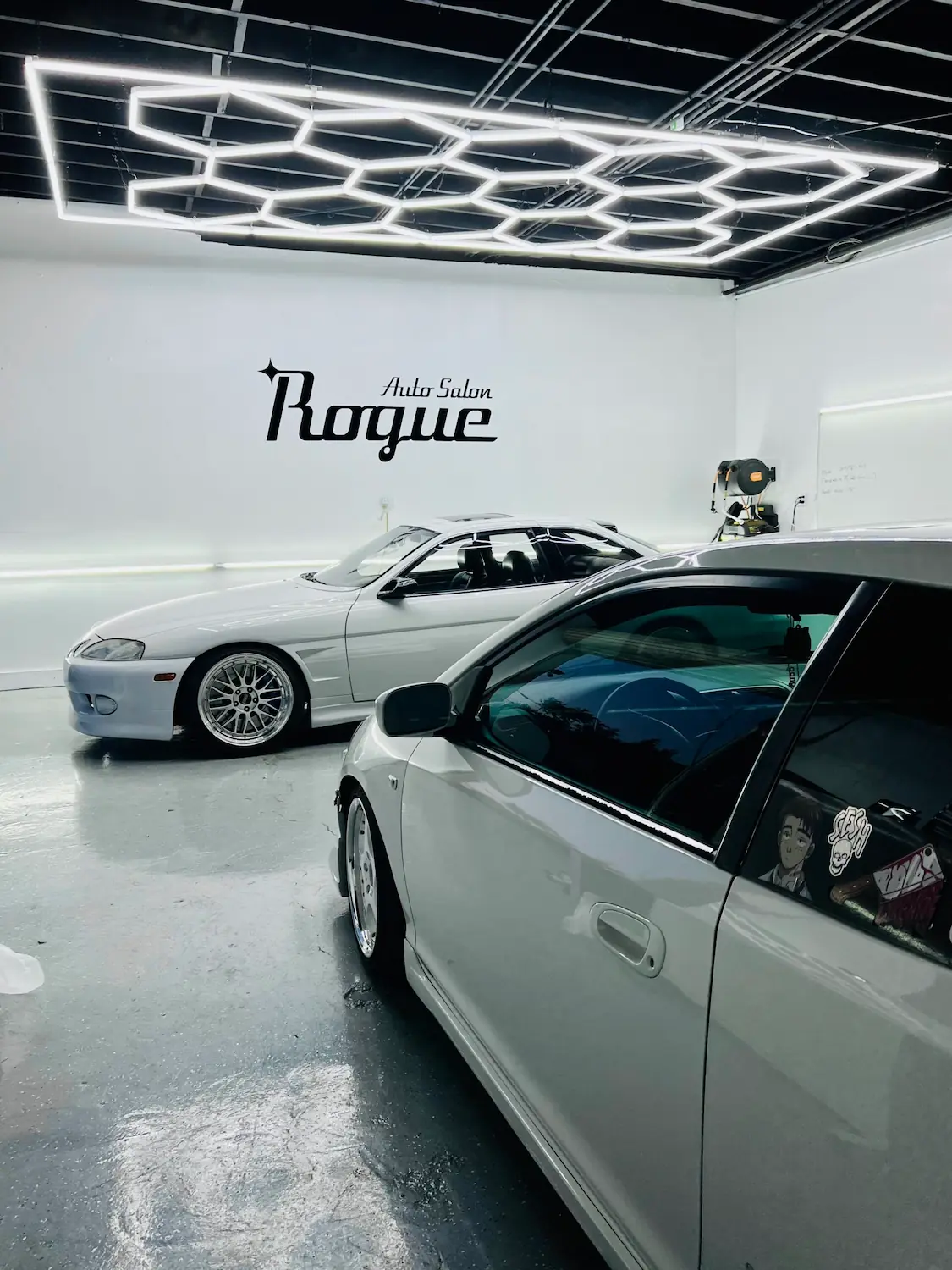
Rogue Auto Salon also explains the distinction between ceramic tint and conventional film in its guide to ceramic heat rejection, including why ceramic can provide strong performance without necessarily requiring a very dark shade.
UV Protection: Ceramic vs Dyed Tint
UV protection is another major advantage of quality window film.
Ultraviolet radiation can contribute to interior fading and material deterioration, while high-quality automotive films can significantly reduce the amount of UV passing through the glass.
Premium ceramic films commonly provide more than 99% UV rejection. For example, 3M rates its Ceramic IR Series for up to 99.9% UV rejection.
However, don’t confuse UV protection with heat rejection.
UV is only one portion of solar radiation. A film can provide excellent UV protection without being the highest-performing film for total solar-energy rejection.
When evaluating ceramic window tint, consider UV protection alongside TSER and the film’s published infrared performance.
Durability, Fading, and Colour Stability
If you plan to keep your vehicle for years, durability becomes an important part of the value equation.
Lower-quality dyed films are more susceptible to fading and colour changes over time. Prolonged UV exposure and heat can contribute to deterioration, potentially resulting in a purple or uneven appearance, bubbling, peeling, or adhesive failure.
Quality ceramic films are designed for greater colour stability and long-term performance.
At Rogue Auto Salon, the ceramic tint offering uses Rayno Phantom S9 Ceramic, while the carbon option is Rayno Phantom S5 Carbon. Rogue’s window tint service states that its films carry a lifetime warranty against fading, delamination, and adhesive failure.
A warranty doesn’t mean every film is literally guaranteed to look perfect forever. Installation quality, glass condition, environmental exposure, and the manufacturer’s warranty terms all matter.
The better question is:
How long is this specific film designed to maintain its appearance and performance, and what does its warranty actually cover?
Optical Clarity and Glare Reduction
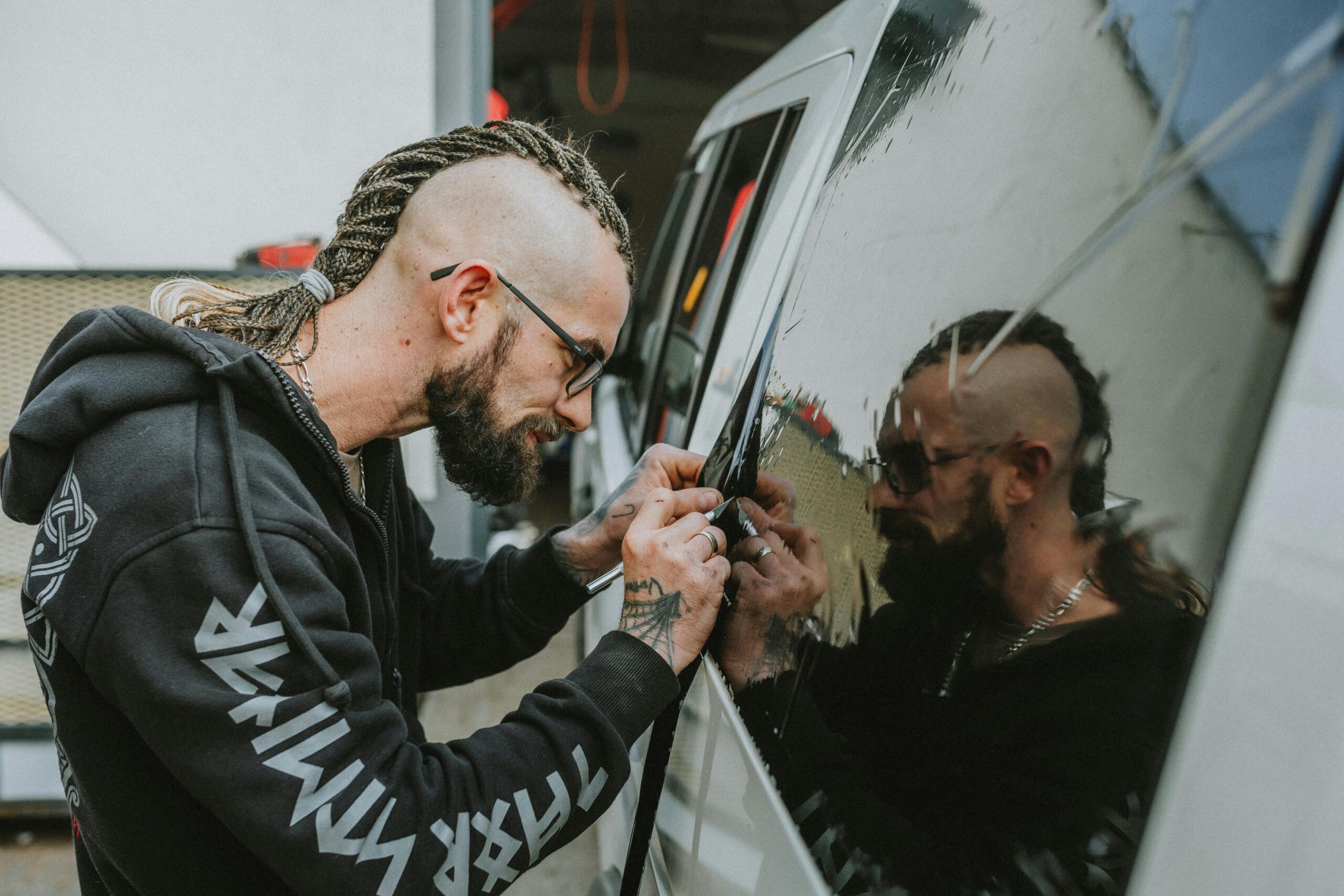
A major advantage of premium ceramic tint is that strong solar performance doesn’t necessarily require extremely dark windows.
Ceramic films are available in different VLT levels, allowing you to balance:
- Privacy
- Appearance
- Heat rejection
- Glare reduction
- Daytime visibility
- Nighttime visibility
- Legal requirements
Rogue Auto Salon also notes that ceramic tint can provide strong heat rejection without requiring dark film, which is particularly useful for drivers who want solar protection while maintaining visibility.
Remember that darkness and film type are separate variables.
A 20% ceramic film and a 20% dyed film have the same nominal VLT, but their thermal and optical performance can differ substantially.
Likewise, extremely dark tint can reduce visibility at night regardless of whether it is ceramic or dyed. Choose the VLT based on your vehicle, driving conditions, preferences, and applicable laws.
Does Ceramic Tint Interfere With GPS or Cell Signals?
Quality ceramic tint is non-metallic and is designed to avoid the signal-interference issues associated with some metallized films.
For example, 3M states that its Ceramic IR Series has a metal-free construction and won’t interfere with electronics, GPS, satellite radio, mobile devices, or 5G.
Dyed film is also non-metallic, so it generally does not create the signal-interference concerns associated with metallic films.
This distinction matters for modern vehicles that depend heavily on wireless connectivity.
Ceramic Tint vs Dyed Tint: Cost and Value
The price of window tint depends on the vehicle, number and size of windows, film manufacturer, product series, VLT, installation complexity, and installer.
Rather than relying on generic national pricing, compare the exact film and service being offered.
For a real-world reference, Rogue Auto Salon currently lists Rayno Phantom S9 ceramic tint at $550 for a sedan, including the four doors, rear quarter windows, and back glass, with a lifetime warranty.
That makes the value question easier to understand.
You’re not simply paying more for a darker window. With ceramic, the premium is primarily for solar performance, heat rejection, UV protection, clarity, durability, and long-term comfort.
Before comparing two quotes, ask:
- What is the exact film manufacturer?
- What is the exact film series?
- What VLT is being installed?
- What is the TSER?
- What are the published infrared specifications?
- What UV rejection does the film provide?
- Is the film metal-free?
- What warranty is included?
- What windows are included in the price?
- Who is performing the installation?
If a shop only tells you “it’s ceramic,” you don’t yet have enough information to make a meaningful comparison.
Is Ceramic Tint Worth the Extra Cost?
For many drivers, yes, but it depends on what you want from your tint.
Ceramic tint is particularly worthwhile if you:
- Park outdoors frequently
- Drive long distances
- Live in a hot or sunny climate
- Want stronger heat rejection
- Want high UV protection
- Plan to keep your vehicle for years
- Want better colour stability
- Care about optical clarity
- Want premium performance at a lighter VLT
- Prefer to install quality film once rather than replace lower-quality film later
When Dyed Tint Makes More Sense
Dyed tint can be the better choice when initial price is the main concern.
It makes sense if your primary goals are:
- Adding privacy
- Creating a darker appearance
- Reducing glare
- Spending less upfront
- Tinting a vehicle you don’t expect to keep for many years
There’s nothing inherently wrong with choosing dyed film when those are your priorities. The key is understanding that you’re primarily buying basic tinting functionality, not the same level of solar performance as a premium ceramic film.
When Ceramic Tint Makes More Sense
Ceramic is the stronger choice when performance is more important than the lowest upfront price.
Choose ceramic if you want:
Better heat rejection: Reduce the amount of solar heat entering the cabin.
Strong UV protection: Help protect the vehicle interior and occupants from UV exposure.
Long-term colour stability: Reduce the risk of fading and discoloration associated with lower-quality dyed films.
Better clarity: Maintain excellent visibility while still gaining substantial solar protection.
Premium performance without extreme darkness: Use a lighter VLT while still getting meaningful solar and infrared performance.
Don’t Confuse Tint Darkness With Tint Performance
This is one of the most important points in the entire Ceramic Tint vs Dyed Tint comparison.
A darker tint is not automatically a better heat-rejecting tint.
VLT, or Visible Light Transmission, describes how much visible light passes through the glass. A lower VLT percentage means a darker film.
But VLT doesn’t tell you how effectively a film rejects solar energy.
When shopping for window tint, compare:
VLT + TSER + infrared performance + UV protection + warranty
rather than simply asking:
“How dark is it?”
Rogue Auto Salon’s existing guide on how much tint you need also emphasizes choosing the film and darkness level according to the balance between appearance and performance.
What About Carbon and Hybrid Tint?
Although this guide focuses on ceramic and dyed film, carbon tint is an important middle-ground option.
Carbon tint uses carbon particles and generally offers better heat rejection, colour stability, and durability than basic dyed film while remaining non-metallic.
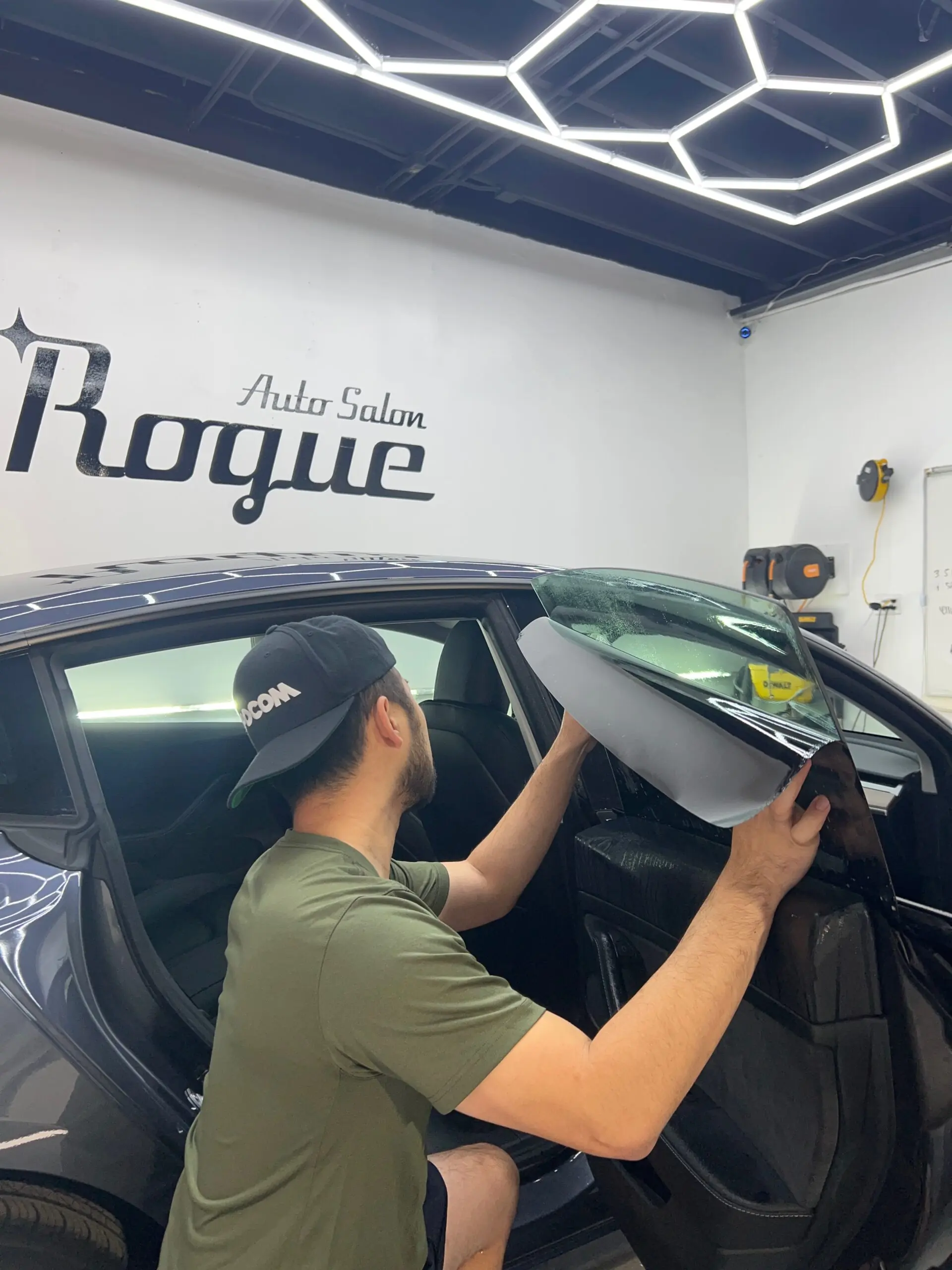
Rogue Auto Salon currently offers Rayno Phantom S5 Carbon alongside its Rayno Phantom S9 Ceramic film.
A simple way to understand the market is:
Dyed → Carbon → Ceramic
That’s a useful general hierarchy, but it isn’t a substitute for comparing actual manufacturer specifications.
Hybrid or metallized films are another category. Because metallic particles can affect electronic signals in some applications, drivers with modern connected vehicles should verify compatibility before choosing one.
For Rogue customers specifically, the carbon-versus-ceramic decision can be explored further in the existing Carbon vs Ceramic Window Tint guide rather than repeating that entire comparison here.
What Should You Look for When Buying Window Tint?
Before choosing a film, use this checklist:
1. Identify the exact film
“Carbon” or “ceramic” isn’t enough. Get the manufacturer and product series.
2. Check VLT
Know exactly how dark the film is.
3. Compare TSER
Use Total Solar Energy Rejection to compare broader solar performance.
4. Check infrared specifications
Look at the manufacturer’s stated IR measurement and test conditions.
5. Check UV protection
Premium films commonly provide very high UV rejection, but verify the actual specification.
6. Confirm the warranty
Find out what the warranty covers, how long it lasts, and who handles warranty claims.
7. Consider installation quality
Even an excellent film can produce poor results when preparation and installation are inadequate.
8. Verify local tint laws
A film can be technically excellent yet unsuitable if the selected VLT isn’t legal for your vehicle’s windows.
Window Tint Laws: Check Before Choosing Your VLT
Tint regulations vary by location, so don’t assume that a shade legal in another state or country is legal for your vehicle.
Because Rogue Auto Salon is located in San Jose, California, California-specific requirements should be checked when selecting front-window or windshield film rather than relying on generic VLT advice.
If you’re researching tint laws for another jurisdiction, verify the current rules with the relevant government or transportation authority before installation.
Frequently Asked Questions
Is ceramic tint better than dyed tint?
Yes, ceramic tint generally offers better overall performance than dyed tint, particularly for heat rejection, UV protection, colour stability, and long-term durability. Dyed tint remains attractive for drivers whose main priorities are affordability, privacy, and appearance.
Does ceramic tint keep a car cooler than dyed tint?
Generally, yes. Premium ceramic films are engineered for substantially stronger solar and infrared performance than basic dyed films. However, the exact difference depends on the film, VLT, glass, vehicle, and testing method.
Does ceramic tint block 99% of UV rays?
Many premium ceramic films provide more than 99% UV rejection. For example, 3M’s Ceramic IR Series is rated for up to 99.9% UV rejection. Always verify the specification for the exact film being installed.
Does ceramic tint interfere with GPS or cell phone signals?
Quality ceramic tint is non-metallic and is designed not to interfere with GPS, mobile devices, Bluetooth, radio, or other wireless electronics. 3M specifically describes its Ceramic IR film as metal-free.
Is ceramic tint worth the extra money?
For drivers who prioritize heat rejection, UV protection, comfort, clarity, and long-term durability, ceramic tint can be worth the additional investment. If you mainly want privacy and a darker appearance at the lowest possible cost, dyed tint may be sufficient.
Is darker tint better at rejecting heat?
Not necessarily. VLT measures tint darkness, while solar performance is evaluated using measurements such as TSER and infrared rejection. A lighter ceramic film can provide substantial heat rejection without being extremely dark.
What is the difference between ceramic and carbon tint?
Both are non-metallic options, but ceramic is generally positioned as the higher-performance film for heat rejection and solar control. Carbon provides a useful middle ground between dyed and ceramic. The actual performance depends on the specific product and manufacturer specifications.
How do I choose between ceramic and dyed tint?
Start with your priorities. Choose dyed if affordability, privacy, and appearance are most important. Choose ceramic if heat rejection, UV protection, clarity, longevity, and overall performance matter more than minimizing the initial cost.
Ceramic Tint vs Dyed Tint: Final Verdict
So, which is better: ceramic or dyed window tint?
If your priority is the lowest upfront cost, privacy, appearance, and basic glare reduction, dyed tint can be a sensible choice.
If your priorities are heat rejection, UV protection, optical clarity, colour stability, durability, and long-term comfort, ceramic tint is the stronger overall option.
The most important thing is not to buy based solely on a label such as “ceramic,” “99% UV,” or “90% IR.”
Instead, compare the exact film’s VLT, TSER, infrared performance, UV protection, warranty, and installation quality.
For Rogue Auto Salon customers, the choice can be narrowed further by comparing the Rayno Phantom S5 Carbon and Rayno Phantom S9 Ceramic options according to your budget and performance priorities.