Autocare
Llumar vs XPEL Window Tint
Llumar vs. XPEL Window Tint: Which Brand Is Better? (2026 Comparison)
If you’re comparing Llumar vs XPEL Window Tint, the right choice isn’t simply the brand with the highest advertised infrared-rejection percentage or the darkest appearance.
Both manufacturers offer premium automotive window films designed to reduce solar heat, block UV radiation, improve comfort, reduce glare, and enhance the appearance of your vehicle.
The bigger question is which specific film is right for your vehicle and priorities.
For example, comparing LLumar IRX vs XPEL PRIME XR Plus is much more useful than simply comparing “LLumar vs XPEL.” Film series, VLT, testing methodology, heat-rejection measurements, warranty, installation quality, and price can all change the result.
After comparing the available product specifications and installer experience discussed across the sources reviewed, XPEL has an edge in maximum published thermal performance, while LLumar remains a strong choice for balanced heat rejection, optical clarity, product variety, and value.
LLumar vs XPEL Window Tint: Quick Comparison

Category | LLumar | XPEL | Best Choice |
Premium ceramic film | IRX | PRIME XR Plus | Tie |
Maximum published TSER | Up to 62% IRX | Up to 71% XR Plus | XPEL |
Infrared performance | Up to 88% SIRR on IRX | Up to 96% at 1025nm / 70% IRER on XR Plus | XPEL |
UV protection | >99% | 99% | Tie |
Optical clarity | Excellent | Excellent | Very close |
Appearance | Natural charcoal | Darker/neutral appearance | Preference |
Signal compatibility | Non-metallic ceramic options | Non-metallic ceramic construction | Tie |
Product selection | Extensive | Extensive | Tie |
Value | Strong | Premium | LLumar |
Maximum heat rejection | Excellent | Exceptional | XPEL |
Installation quality | Critical | Critical |
Published specifications vary by VLT and measurement method, so these figures should not be interpreted as a universal laboratory ranking.
LLumar’s current performance data lists IRX at up to 62% TSER and greater than 99% UV protection, while XPEL’s PRIME XR Plus specification sheet lists up to 71% TSER and 99% UV rejection.
The Short Answer: Is Llumar or XPEL Better?
XPEL is the stronger choice if your primary goal is maximum thermal performance.
LLumar is an excellent alternative if you want strong heat rejection, excellent clarity, a charcoal appearance, and potentially better value depending on the film and installer.
For premium ceramic tint, the most relevant comparison is LLumar IRX vs XPEL PRIME XR Plus.
XPEL PRIME XR Plus has the higher published maximum TSER, reaching 71% in its darkest listed shade, while LLumar IRX reaches up to 62% TSER. XPEL also publishes 70% IRER across its listed XR Plus shades and up to 96% infrared rejection at 1025nm. LLumar’s IRX data lists up to 88% selective infrared rejection.
However, that doesn’t mean every XPEL film will outperform every LLumar film. The exact product and VLT matter.
Understanding LLumar and XPEL Window Tint
LLumar Window Tint
LLumar is an established automotive window-film manufacturer with a broad range of products, including ceramic, dyed, and metallized films.
Its premium ceramic lineup includes IRX and CTX, while its FormulaOne range provides additional premium options.
LLumar describes IRX as an advanced nano-ceramic film designed specifically to reduce infrared heat, while CTX provides ceramic heat rejection with a more value-oriented positioning.
LLumar IRX is particularly interesting for drivers who want a balance between heat rejection, clarity, appearance, and everyday comfort. Its current specifications show greater than 99% UV protection across the listed IRX shades.
XPEL Window Tint
XPEL’s PRIME lineup includes PRIME CS, PRIME XR, and PRIME XR Plus.
PRIME XR Plus is the flagship ceramic option among the three and uses multi-layer nano-ceramic technology. XPEL currently lists XR Plus with up to 96% infrared rejection, up to 70% IRER, 99% UV protection, and up to 71% TSER depending on shade.
That makes XPEL particularly attractive for vehicles exposed to intense sunlight, especially large SUVs, vehicles with panoramic glass, and drivers who spend considerable time in hot climates.
LLumar IRX vs XPEL XR Plus: Heat Rejection
Heat rejection is one of the biggest reasons people upgrade from basic dyed tint to ceramic window tint.
The most useful number for overall solar performance is TSER, or Total Solar Energy Rejection. It measures the percentage of total solar energy rejected by the filmed glass under specified testing conditions.
Here is where XPEL has an advantage based on the published specifications reviewed:
Film | Maximum TSER | IRER | UV Protection |
XPEL PRIME XR Plus | Up to 71% | Up to 70% | 99% |
LLumar IRX | Up to 62% | Up to 61% | >99% |
The exact figures change according to VLT. XPEL XR Plus ranges from 71% TSER at its darkest listed shade to 53% at 57% VLT, while LLumar IRX ranges from 62% TSER at its darkest listed shade to 50% at 54% VLT.
Winner for maximum published thermal performance: XPEL PRIME XR Plus.
But there’s an important caveat: TSER, IRER, SIRR, and single-wavelength IR rejection are different measurements.
A 96% infrared figure shouldn’t automatically be compared with a 61% IRER figure as if they measure the same thing.
Infrared Rejection: Which Tint Blocks More IR Heat?
Infrared radiation is a major component of solar energy and is one reason ceramic window tint feels cooler than conventional dyed film.
XPEL’s XR Plus specification sheet lists 96% IR rejection at 1025nm and 70% IRER across the listed shades.
LLumar’s IRX specifications list selective infrared rejection as high as 88%, while IRER reaches 61% on certain shades.
The important takeaway is not simply that one number is higher.
Always compare the same measurement, wavelength range, and VLT before declaring one film technically superior.
If maximum overall solar-energy rejection is your priority, XPEL XR Plus has a clear published advantage in the specifications reviewed.
UV Protection: Llumar vs XPEL
This category is essentially a tie.
Both brands’ premium automotive films provide approximately 99% or greater UV protection.
LLumar states that its automotive window tint blocks up to 99% of harmful UV rays, while XPEL lists 99% UV protection for PRIME CS, PRIME XR, and PRIME XR Plus.
UV protection can help reduce prolonged UV exposure inside the vehicle and help protect interior materials from sun-related deterioration.
If UV protection is your primary reason for buying tint, you don’t need to choose between the brands based on this specification alone.
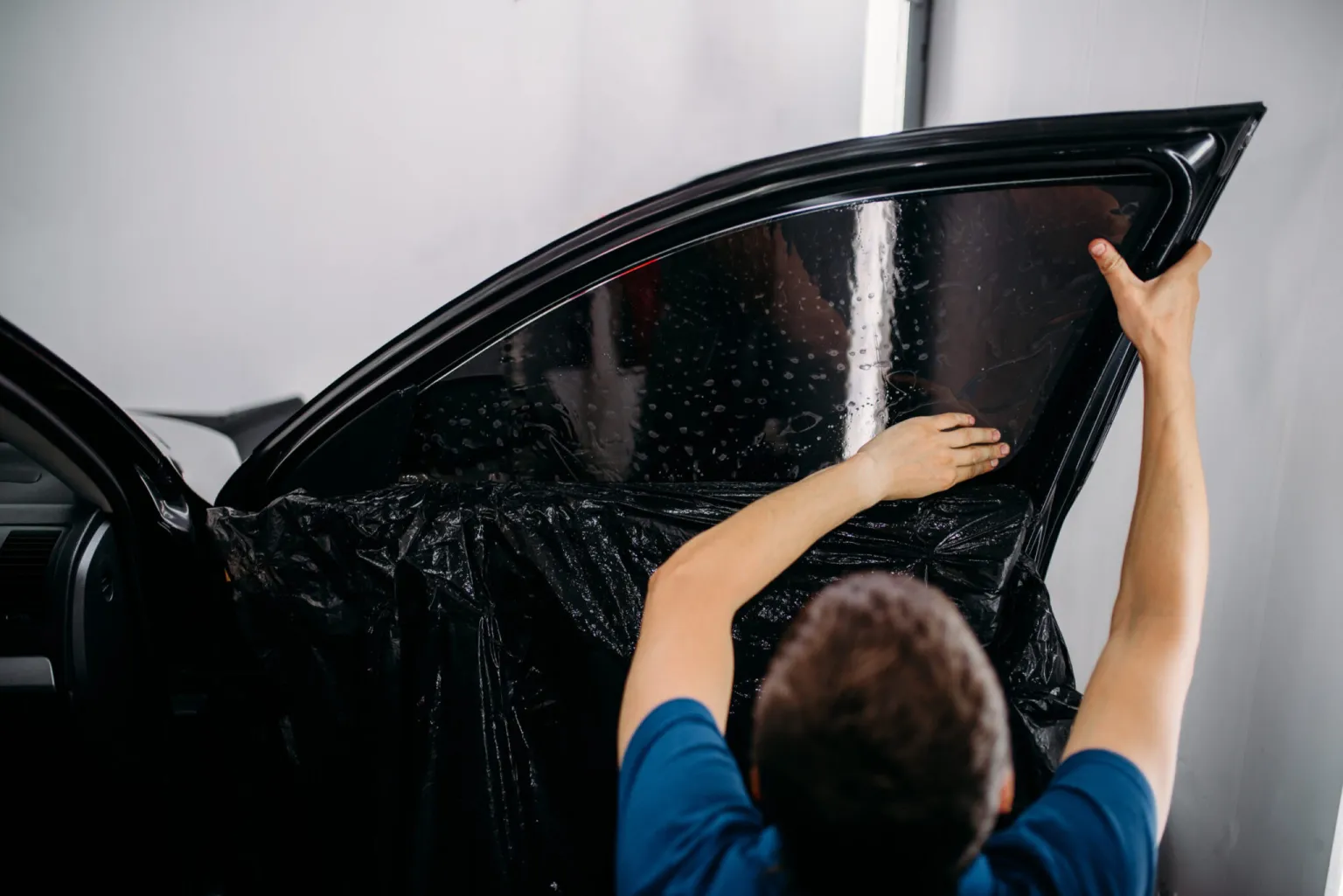
Optical Clarity and Appearance
Both LLumar and XPEL are known for producing high-quality films with good optical clarity.
LLumar’s ceramic films have a charcoal appearance, while XPEL tends toward a darker, neutral appearance depending on the film and shade.
This is largely a matter of personal preference.
If you want a traditional factory-style charcoal appearance, LLumar may be particularly appealing. If you prefer a deeper, darker aesthetic, XPEL can be attractive.
Clarity becomes especially important on:
- Windshields
- Front side windows
- Panoramic roofs
- Large glass areas
- Vehicles driven frequently at night
A premium film should reduce glare and solar heat without introducing distracting haze, distortion, or excessive reflectivity.
Does Darker Tint Reject More Heat?
Not necessarily.
This is one of the most common window-tint misconceptions.
A 20m film is darker than a 50% film because it allows less visible light through. But darkness alone doesn’t determine thermal performance.
When comparing ceramic tint, look at:
- VLT
- TSER
- IRER
- Applicable infrared-rejection measurements
- UV protection
- Film construction
- Existing vehicle glass
- Installation quality
For example, XPEL’s published XR Plus data shows TSER decreasing as VLT becomes lighter. The 5% film is rated at 71% TSER, while the 57% VLT film is rated at 53%.
That means you should choose your shade based on visibility, privacy, appearance, and local laws, not simply assume the darkest film is always the best-performing option.
LLumar CTX vs XPEL XR: Which Offers Better Value?
If you don’t need the maximum performance available, stepping down from the flagship film can make financial sense.
LLumar CTX is a ceramic film designed to provide strong heat rejection without the reflective appearance associated with some metallized films. LLumar lists greater than 99% UV protection across its CTX shades and positions it as a practical ceramic option.
XPEL PRIME XR occupies a higher-performance position within the XPEL lineup, while XR Plus is the premium thermal-performance option.
For a buyer primarily concerned with value, LLumar CTX can be a compelling option.
For someone who wants maximum available thermal performance, XPEL XR Plus is the more appropriate comparison.
Warranty and Durability
Warranty coverage should be compared using the exact film and current manufacturer terms rather than assuming every product within a brand has identical coverage.
LLumar states that its automotive window tint carries a manufacturer’s limited lifetime warranty, with certain FormulaOne products receiving transferable lifetime coverage.
XPEL currently states that PRIME window films carry a lifetime XPEL warranty.
A warranty is valuable, but it doesn’t mean the film literally lasts forever. Installation quality, vehicle use, climate, glass, maintenance, and exposure all influence long-term performance.
This is also why choosing an experienced installer is just as important as choosing between two premium manufacturers.
Llumar vs XPEL Window Tint: Pros and Cons
LLumar Pros
- Excellent ceramic heat rejection
- Strong optical clarity
- More than 99% UV protection on IRX
- Natural charcoal appearance
- Broad range of film options
- Strong reputation and dealer network
- Attractive value at certain product levels
LLumar Cons
- IRX’s maximum published TSER is below XPEL XR Plus
- Performance varies considerably between CTX and IRX
- Exact warranty conditions depend on the product
- Brand-level comparisons can be misleading without specifying the film
XPEL Pros
- Excellent thermal performance
- PRIME XR Plus reaches up to 71% TSER
- Up to 70% IRER on published XR Plus specifications
- Up to 96% IR rejection at 1025nm
- 99% UV protection
- Multi-layer nano-ceramic construction
- Strong premium positioning
XPEL Cons
- Premium films can cost more
- Maximum performance comes at a higher price
- Published IR measurements need to be compared carefully with competing measurement methods
- The installer still has a major effect on the final result
Which Is Better for a Hot Climate?
If you live somewhere with intense summer heat, both LLumar and XPEL ceramic tint can make a substantial difference compared with basic dyed film.
For maximum thermal performance, XPEL PRIME XR Plus is the stronger choice based on the published specifications reviewed.
LLumar IRX remains an excellent option and provides strong TSER, infrared performance, UV protection, glare reduction, and a wide range of shades.
For large SUVs, panoramic roofs, and vehicles that sit outside for long periods, upgrading to a high-performance ceramic film can be particularly worthwhile.
Is XPEL Better Than Llumar?
XPEL is not universally better than Llumar, but XPEL PRIME XR Plus has an advantage in maximum published thermal performance over LLumar IRX.
LLumar can make more sense when you prioritize balanced performance, charcoal appearance, product variety, or value.
The better comparison is therefore:
XPEL PRIME XR Plus vs LLumar IRX for maximum-performance ceramic tint.
And:
XPEL PRIME XR vs LLumar CTX when comparing lower-cost premium ceramic options.
How to Choose Between Llumar and XPEL
Before purchasing, ask your installer five questions:
- Which exact film series are you installing?
- What VLT will be installed?
- What are the film’s TSER and infrared specifications?
- What warranty applies to this specific product?
- Who is performing the installation and what experience do they have?
Don’t settle for simply hearing that you’re getting “premium ceramic tint.”
Two films from the same manufacturer can have significantly different specifications, and the same film can look very different depending on the quality of installation.

Frequently Asked Questions
Is Llumar or XPEL better?
Both are premium window-film brands. XPEL has an advantage in maximum published thermal performance with PRIME XR Plus, while LLumar offers excellent heat rejection, clarity, UV protection, and product variety.
Is XPEL XR Plus better than LLumar IRX?
For maximum published TSER, yes. XPEL XR Plus reaches up to 71% TSER compared with up to 62% for LLumar IRX. However, the exact VLT and measurement methodology should be considered before making a direct technical comparison.
Does Llumar tint block UV rays?
Yes. LLumar states that its automotive window films can block up to 99% of harmful UV rays, with IRX listed at greater than 99% UV protection in its published performance data.
Does XPEL tint block UV rays?
Yes. XPEL lists 99% UV protection across its PRIME CS, PRIME XR, and PRIME XR Plus window-film products.
Which tint rejects the most heat?
Among the specific films compared here, XPEL PRIME XR Plus has the highest published maximum TSER at 71%. Actual performance depends on the selected shade and the vehicle’s glass.
Is ceramic tint worth it?
Ceramic tint can be worth the additional investment if you prioritize heat rejection, infrared performance, UV protection, glare reduction, optical clarity, and long-term cabin comfort. If you primarily want privacy and appearance, a less expensive film may offer better value.
Is darker tint always better?
No. Darker tint reduces visible light transmission, but darkness alone does not determine heat rejection. Compare the exact film’s VLT, TSER, IRER, and other applicable specifications.
Which is better for a windshield, Llumar or XPEL?
Either manufacturer can provide high-quality solutions, but the exact film, VLT, local regulations, optical clarity, and installer are critical. Windshield applications should always be selected with applicable legal requirements in mind.
Llumar vs XPEL Window Tint: Final Verdict
So, which should you choose?
Choose XPEL PRIME XR Plus if maximum thermal performance is your top priority. Its published specifications reach up to 71% TSER, 70% IRER, and 99% UV rejection, making it one of the strongest premium ceramic options in this comparison.
Choose LLumar IRX if you want excellent heat rejection, clarity, UV protection, a charcoal appearance, and a strong all-around premium film. Its published specifications reach up to 62% TSER, with greater than 99% UV protection and strong infrared performance.
And if budget matters, LLumar CTX can be a sensible step into premium ceramic tint without automatically paying for the highest-performance film.
Ultimately, the best Llumar vs XPEL Window Tint decision comes down to the exact film, VLT, performance specifications, warranty, vehicle glass, and installer, not simply the logo printed on the box.
If you’re considering ceramic window tint for your vehicle, Rogue Auto Salon can help you compare film options based on your vehicle, preferred shade, heat-rejection goals, and budget.
The goal isn’t simply to make your windows darker. It’s to make your vehicle cooler, more comfortable, better protected, and easier to enjoy every day.