Can You Polish Paint Protection Film? What You Need to Know
When and How to Polish Paint Protection Film Properly
If you’ve invested in paint protection film (PPF) to keep your vehicle looking new, it’s only natural to want that same flawless gloss months or even years later. Over time, however, you may start to notice light swirl marks, haze, or a general dulling of the surface. This often leads car owners to ask an important question: Can you polish paint protection film safely, or will doing so damage the film?
The short answer is yes, you can polish paint protection film, but only if it’s done carefully, with the right products, techniques, and expectations. In this guide, we’ll cover everything you need to know: when polishing PPF makes sense, when it doesn’t, how it should be done, and why professional expertise often matters more than the tools themselves.
Understanding Paint Protection Film and How It Ages
Paint protection film is a clear, durable urethane layer applied to a vehicle’s painted surfaces. Its primary job is to protect against physical damage such as rock chips, scratches, road debris, bug splatter, and environmental fallout. In many ways, it acts like an invisible shield, preserving the factory paint underneath.
Modern PPFs are significantly more advanced than early versions. Many include a self-healing top layer designed to reduce the appearance of light swirl marks when exposed to heat from sunlight or warm water. Despite these advancements, PPF is still exposed to the same real-world conditions as your paint, washing, drying, pollution, UV rays, and daily wear.
Over time, this exposure can lead to:
Light swirls from improper washing
Minor etching or spotting from contaminants
Loss of clarity or gloss
This natural aging process is what leads many owners to wonder: Can you polish paint protection film to restore its appearance?
What Does Polishing Actually Do?
Polishing is a controlled, light abrasive process designed to refine a surface. On paint, it removes a microscopic layer of clear coat to eliminate swirls and restore gloss. On PPF, the concept is similar, but the margin for error is much smaller.
PPF has a much thinner top layer than automotive clear coat. This means polishing must be:
Less aggressive
More controlled
Focused on improvement, not perfection
Polishing PPF is best thought of as a refresh, not a full correction. Its goal is to improve clarity and appearance, not to make heavily damaged film look brand new.
Is Paint Protection Film Designed to Be Polished?
This is where things get nuanced. Many PPF manufacturers advise against polishing because improper techniques can damage the film or void warranties. That doesn’t mean polishing is impossible; it means it carries risk if done incorrectly.
From real-world detailing experience, most modern, high-quality PPFs can be polished carefully. However, each film behaves differently, and you won’t know how a specific film responds until you test it.
Key points to understand:
Self-healing films may not need polishing for light swirls
Older or lower-quality films may react poorly.
Non–self-healing films are more likely to benefit from polishing.
When the film is heavily worn and replacement isn’t an option, polishing may be the only cost-effective way to improve its appearance.
When Polishing PPF Makes Sense
There are clear situations where polishing paint protection film is reasonable and beneficial.
You Should Consider Polishing PPF When:
The film has light swirl marks or haze
The gloss has noticeably diminished.
You’re preparing the surface for a ceramic coating.
Replacement isn’t practical or within budget.
In these cases, polishing can significantly improve the look of the film at a fraction of the cost of removal and reinstallation.
When You Should NOT Polish Paint Protection Film
Just as important as knowing when to polish is knowing when not to.
Avoid Polishing PPF If:
The film is peeling, cracked, or lifting
There is heavy yellowing or staining.
You’re unsure what type of film is installed.
The damage goes beyond surface-level defects.
In these scenarios, polishing may worsen the problem. Professional evaluation or film replacement is often the safer solution.
Can You Polish Paint Protection Film at Home?
This depends on your experience level, tools, and expectations.
Hand Polishing: The Safest Option
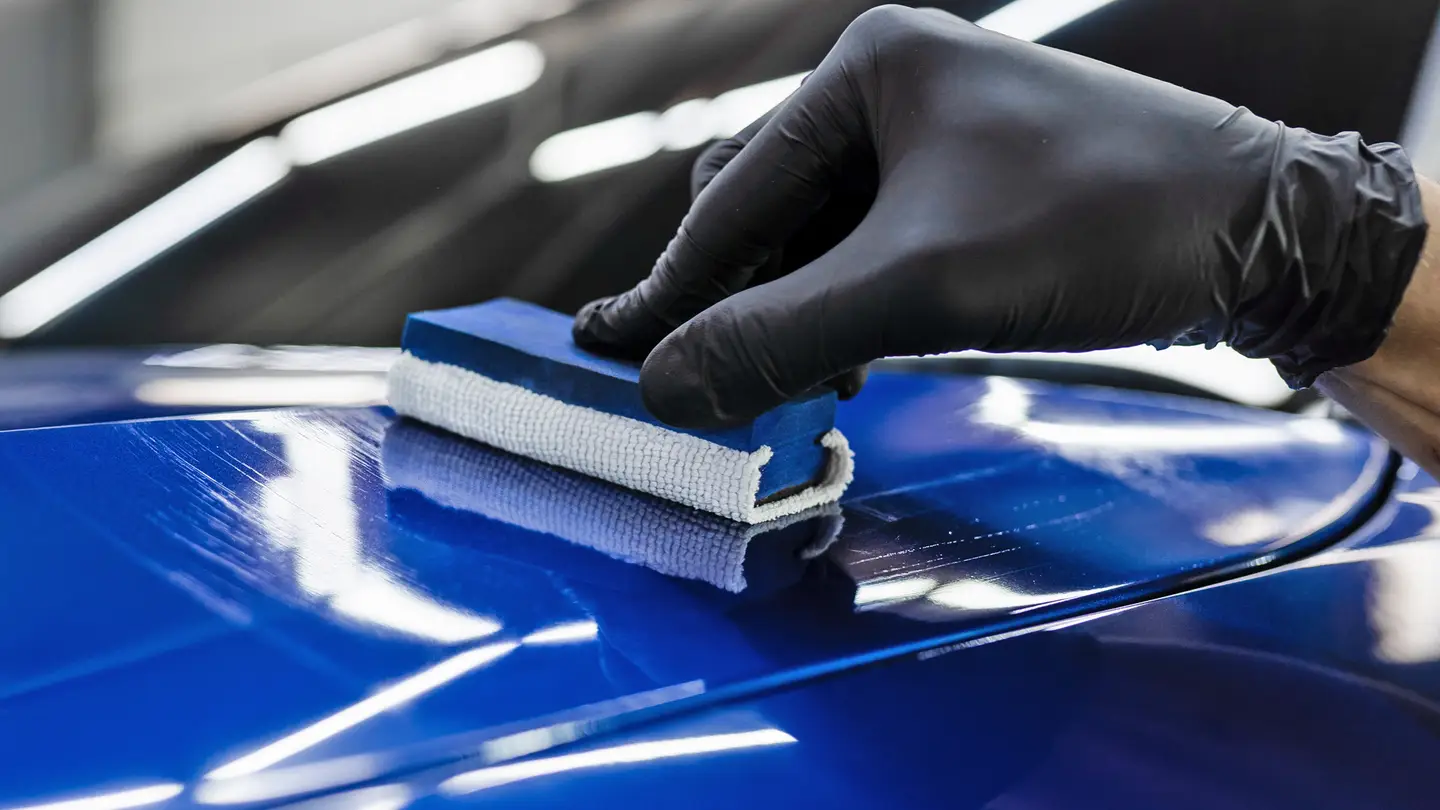
For most vehicle owners, hand polishing is the safest way to address minor imperfections in PPF. It involves:
Using a soft microfiber or foam applicator
Applying light pressure
Working in small sections at a time
Hand polishing is slower, but it dramatically reduces the risk of overheating or cutting through the film. It’s ideal for light swirls or dullness.
Machine Polishing PPF: Proceed With Caution
Machine polishing paint protection film can deliver better results, but it also carries a higher risk.
Experienced detailers often prefer machine polishing because it offers:
Greater precision
More consistent results
Better control over edges
However, machine polishing requires:
Low speeds
Minimal pressure
Polishing (not cutting) pads
Constant awareness of heat buildup
Aggressive pads or high-speed rotary buffers can haze, burn, or permanently damage the film if misused.
The Importance of Test Spots
One of the most critical rules when polishing PPF is always to perform a test spot first.
Because every film responds differently:
Start with the least aggressive method
Evaluate the results
Adjust only if necessary.
This approach minimizes risk and helps you understand how the specific PPF reacts before committing to the entire panel.
Choosing the Right Products for Polishing PPF
Product choice matters just as much as technique.
Safe Characteristics to Look For:
Mild, non-abrasive polishes
Water-based and silicone-free formulas
Products designed for PPF, vinyl, or clear surfaces
Aggressive compounds, heavy cutting polishes, or solvent-based cleaners should be avoided entirely. These can cloud the film, weaken its top layer, or cause lifting at the edges.
Pads Matter More Than You Think
When polishing paint protection film, the pad choice can make or break the outcome.
Recommended:
Soft foam polishing pads
Pads designed for finishing rather than cutting
Avoid:
Wool pads
Microfiber cutting pads
Coarse or aggressive foam
Aggressive pads tend to haze PPF, making it harder to restore clarity and gloss afterward.
Handling Edges: One of the Biggest Challenges
One of the most time-consuming aspects of polishing PPF is dealing with visible film edges. Many installations use pre-cut film, which leaves exposed edges that must be handled carefully.
Best practices include:
Taping edges when dealing with light defects
Polishing “off the edge” carefully if necessary
Cleaning residue from the edges immediately
Allowing polish to dry along edges can leave residue that’s difficult to remove and detracts from the final appearance.
Heat Management Is Critical
PPF is sensitive to heat. Excessive heat buildup during polishing can:
Burn the film
Distort the surface
Permanently damage the top layer.
This is why lower speeds, light pressure, and constant movement are essential, especially when machine polishing.
Care After Polishing Paint Protection Film
Once the film has been polished and its appearance restored, protection becomes the next priority.
Post-Polishing Protection Options:
Sealants that won’t leave residue along edges
Spray sealants or maintenance coatings.
Full ceramic coatings designed for PPF
Protective products help maintain the improved finish and reduce how often polishing may be needed in the future.
Why Ceramic Coating Pairs Well After Polishing PPF
While polishing improves appearance, it doesn’t add protection. Applying a ceramic-style coating after polishing can:
Enhance gloss further
Improve hydrophobic performance
Protect the PPF from UV and chemical exposure.
Make maintenance easier
This combination helps keep the film looking better for longer and reduces the need for repeated polishing.
Can Polishing Void Your PPF Warranty?
This is an important consideration. Many PPF manufacturers discourage polishing because improper techniques can compromise the film’s integrity. In some cases, polishing may void warranty coverage.
Before proceeding:
Review your PPF manufacturer’s guidelines
Consult with a professional detailer.
Weigh cosmetic improvement against warranty considerations.
When film is already heavily worn, warranty concerns may be less relevant than improving appearance.
When Professional Help Is the Best Choice
If you’re still asking yourself, can you polish paint protection film without damaging it, the safest answer may be to let a professional decide.
Experienced detailers can:
Assess the condition of the film
Determine whether polishing is safe.
Choose the correct products and methods.
Recommend alternatives such as ceramic layering or replacement.
Professional evaluation can save time, money, and prevent irreversible damage.
Final Thoughts: Can You Polish Paint Protection Film?
So, can you polish paint protection film? Yes, but it’s not as simple as polishing paint, and it’s not always the right solution.
Polishing PPF can:
Restore clarity and gloss
Reduce light swirls and haze.
Extend the visual life of the film.
However, it must be done gently, with the right products, tools, and expectations. It’s not a cure-all for severely damaged or aging film, and in some cases, replacement is the smarter choice.
When done correctly, or by experienced professionals, polishing paint protection film can be a valuable way to refresh your vehicle’s appearance while continuing to protect the paint underneath.
The key is knowing when to polish, when to stop, and when to seek expert guidance.