Autocare

Common Types of Windshield Chips Explained

Types of Windshield Chips: How to Identify and Repair Common Chip Damage

If you’ve ever noticed a small mark on your windshield after driving on a highway or through a construction zone, you may have wondered whether it’s serious enough to repair. Understanding the different types of windshield chips is important because not all windshield damage is the same. Some chips can be repaired quickly and affordably, while others may develop into larger cracks that require a complete windshield replacement.

Modern windshields are designed to be strong and durable, but they aren’t immune to damage. Rocks, gravel, road debris, temperature changes, and everyday driving conditions can all leave their mark on your auto glass. 

The sooner you identify the type of chip you’re dealing with, the better your chances of preventing further damage and avoiding unnecessary costs.

In this guide, we’ll explain the most common types of windshield chips, how they occur, when they can be repaired, and what steps you should take to protect your windshield and your safety.

Window Tinting

Why Understanding Types of Windshield Chips Matters

Many drivers assume that all windshield damage is the same. In reality, different chip patterns behave differently and require different repair approaches.

The type of chip affects:

  • Whether the damage can be repaired
  • How quickly it may spread
  • The overall strength of the windshield
  • Repair costs
  • Whether replacement becomes necessary

A tiny chip today can become a long crack tomorrow if left untreated. By understanding the most common types of windshield chips, you can make informed decisions and address problems before they worsen.

What Causes Windshield Chips?

Before looking at specific chip types, it helps to understand what causes them.

Most windshield chips occur when an object strikes the outer layer of the glass. Common causes include:

  • Loose gravel
  • Road debris
  • Small rocks
  • Construction materials
  • Hail
  • Debris thrown from other vehicles

When an object impacts the windshield at high speed, it may remove a small portion of the glass or create a fracture pattern around the impact point.

Unlike ordinary glass, modern windshields are made from laminated safety glass. This construction helps prevent the glass from shattering, but it doesn’t make it immune to chips and cracks.

The Most Common Types of Windshield Chips

Let’s take a closer look at the windshield chip patterns technicians encounter most often.

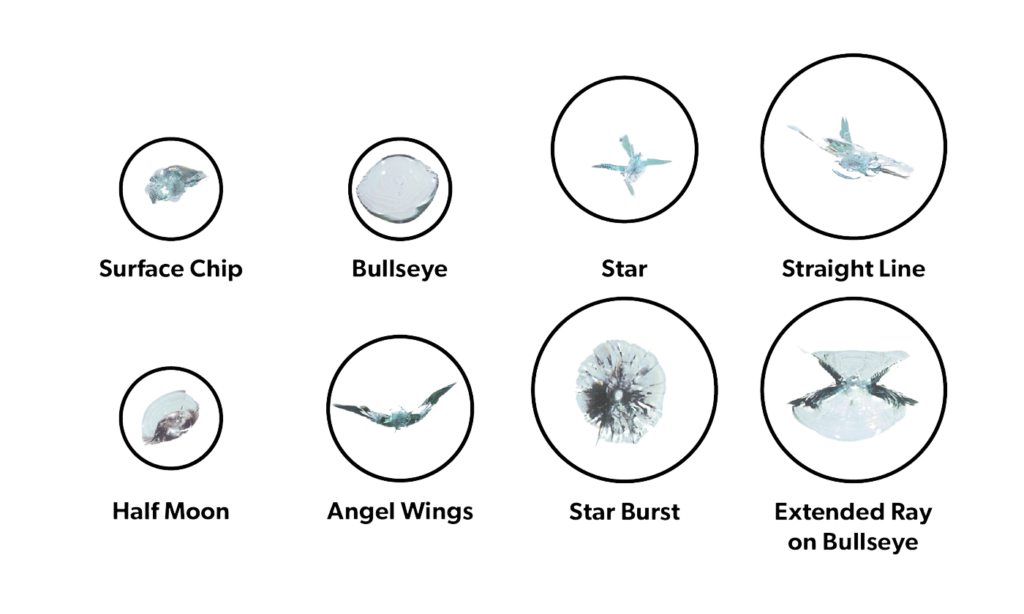
1. Basic Chip (Pit)

A basic chip, often called a pit, is the simplest form of windshield damage.

This occurs when a small piece of glass breaks away from the outer surface of the windshield, leaving a visible mark or indentation.

Characteristics include:

  • Small area of missing glass
  • Minimal spreading
  • Usually caused by stone impacts
  • Common on highways and gravel roads

Pit damage may appear minor, but even small chips weaken the glass. If moisture, dirt, or temperature changes affect the damaged area, the chip can grow into a larger problem.

When addressed early, basic chips are often among the easiest windshield repairs.

2. Bullseye Chip

One of the most recognizable types of windshield chips is the bullseye chip.

A bullseye chip features:

  • A circular shape
  • A distinct impact point
  • A dark ring around the center

The damage resembles the center of a target, which is where the name comes from.

Bullseye chips typically occur when:

  • Rocks strike the windshield directly
  • The impact is concentrated in one area
  • The object hits the glass at high speed

Bullseye chips are among the most commonly repaired forms of windshield damage. When treated promptly, technicians can often restore much of the windshield’s strength and prevent further spreading.

3. Half-Moon Chip

A half-moon chip is similar to a bullseye chip but lacks the complete circular shape.

Instead, the damage forms a partial circle or crescent pattern.

Half-moon chips usually develop when:

  • Debris strikes the windshield at an angle
  • Impact force is unevenly distributed
  • The object glances off the glass

Because of their irregular shape, half-moon chips may sometimes be slightly more challenging to repair than standard bullseyes.

However, they are often repairable when addressed before additional cracking develops.

4. Star Break

A star break is one of the more distinctive forms of windshield damage.

It consists of:

  • A central impact point
  • Several cracks radiating outward
  • A pattern resembling a star

Star breaks often result from:

  • Larger debris impacts
  • High-speed collisions with stones
  • Strong concentrated force

One reason star breaks require prompt attention is that the radiating cracks can continue spreading. What begins as a repairable chip may eventually become a long crack if ignored.

Many small star breaks can be repaired successfully, though a faint mark may remain visible after the repair.

5. Combination Break

A combination break occurs when multiple damage patterns appear together.

For example, a windshield may develop:

  • A bullseye chip with radiating cracks
  • A star break connected to a chip
  • Multiple overlapping fracture patterns

Combination breaks are typically caused by:

  • High-force impacts
  • Larger debris strikes
  • Hail damage
  • Vehicle accidents

Because several forms of damage are involved, combination breaks can be more difficult to repair than standard chips.

Whether repair is possible depends on the size, location, and severity of the damage.

How big a crack in windshield can be repaired

How Windshield Chips Turn Into Cracks

One of the biggest misconceptions about windshield chips is that they stay the same size.

Unfortunately, this is rarely the case.

Several factors can cause chips to spread and develop into cracks.

Temperature Changes

Windshield glass expands and contracts as temperatures fluctuate.

Rapid changes can place stress on damaged areas.

Examples include:

  • Hot summer afternoons followed by cool nights
  • Using a defroster on an icy windshield
  • Parking in direct sunlight

Even small chips can expand when exposed to repeated temperature cycles.

Road Vibrations

Daily driving exposes your windshield to constant movement and vibration.

Potholes, rough roads, and uneven pavement can increase stress on damaged glass and encourage crack growth.

Structural Pressure

Your windshield helps support the structural integrity of your vehicle.

As the vehicle flexes during normal driving, pressure can concentrate around existing damage.

This is especially true for chips located near the edges of the windshield.

Which Types of Windshield Chips Are Repairable?

Not every chip requires a new windshield.

In many cases, professional repair is possible when:

  • The damage is relatively small
  • The chip has not spread extensively
  • The windshield has only a few damaged areas
  • The damage is confined to the outer glass layer

Repairable damage often includes:

  • Bullseye chips
  • Half-moon chips
  • Small star breaks
  • Pit chips
  • A certain combination breaks

Prompt action greatly increases the likelihood of a successful repair.

When Windshield Replacement Is Necessary

Although many chips can be repaired, some situations require replacement.

Replacement may be recommended when:

  • Damage is extensive
  • Multiple chips are present
  • Long cracks have formed
  • The damage reaches the windshield edge
  • Structural integrity has been significantly compromised

Edge-related damage is particularly concerning because cracks in these areas tend to spread rapidly and weaken the entire windshield.

A professional inspection is always the best way to determine whether repair or replacement is the safest option.

How to Prevent Windshield Chips

While not every chip can be avoided, drivers can reduce their risk significantly.

Maintain a Safe Following Distance

Many windshield chips occur because vehicles travel too closely behind trucks or other cars.

Leaving extra space helps reduce exposure to flying debris.

Drive Carefully on Gravel Roads

Loose stones can easily become airborne and strike the windshield.

Reducing speed helps minimize risk.

Avoid Following Construction Vehicles

Vehicles carrying gravel, dirt, or construction materials are common sources of windshield damage.

Park in Protected Areas

Garages, covered parking, and sheltered spaces help protect windshields from:

  • Hail
  • Falling debris
  • Weather-related damage

Address Small Chips Immediately

One of the best prevention strategies is simply acting quickly.

A small repair today can prevent a large crack tomorrow.

What to Do If You Find a Windshield Chip

Discovering a chip doesn’t necessarily mean you’ll need a new windshield.

Take the following steps:

Inspect the Damage

Look for:

  • Size of the chip
  • Number of damaged areas
  • Visible cracks
  • Whether the damage is spreading

Take a Photo

Photographs can help monitor whether the damage grows over time.

Avoid Extreme Temperature Changes

Do not expose the damaged windshield to sudden heating or cooling whenever possible.

Avoid Rough Roads

Minimizing vibration can help prevent crack expansion.

Schedule a Professional Inspection

The sooner a technician evaluates the damage, the more likely repair remains an option.


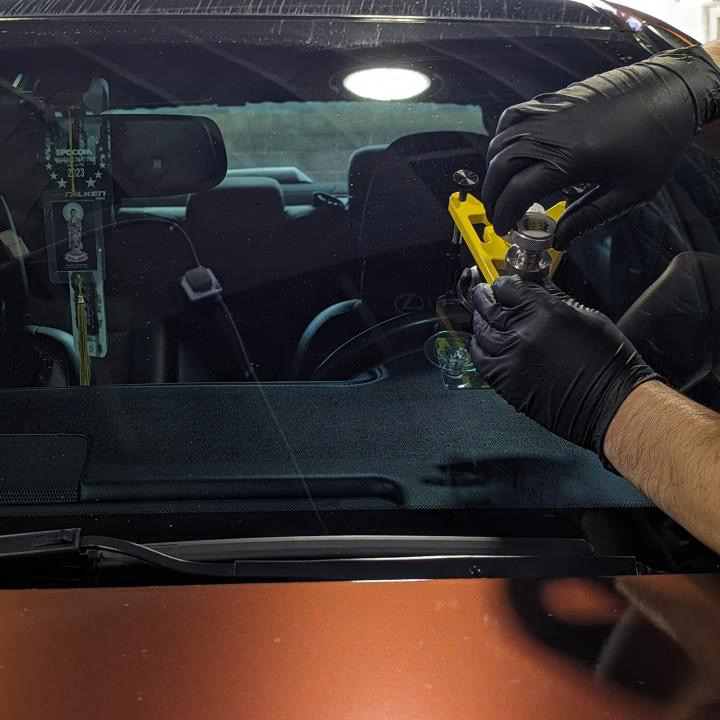
Windshield Rock Chip Repair

Why Early Windshield Repair Saves Money

Many drivers delay repairs because the damage appears minor.

Unfortunately, waiting often increases repair costs.

Early chip repair can:

  • Prevent crack formation
  • Preserve the original windshield
  • Reduce replacement costs
  • Maintain vehicle safety
  • Improve visibility

In many cases, repairing a chip takes less time and costs significantly less than replacing the entire windshield.

Common Questions About Types of Windshield Chips

Can all windshield chips be repaired?

No. Repairability depends on the chip’s size, location, depth, and whether cracks have already developed.

Which chip is easiest to repair?

Small bullseye chips and pit chips are often among the easiest forms of damage to repair.

Are star breaks serious?

Yes. Star breaks can spread quickly because of the multiple cracks extending from the impact point.

Can a chip become a crack overnight?

Absolutely. Temperature changes and road vibrations can cause rapid crack growth.

Final Thoughts

Understanding the different types of windshield chips can help you respond quickly and make informed decisions about repairs. Common windshield chip types include pit chips, bullseye chips, half-moon chips, star breaks, and combination breaks. While many of these forms of damage are repairable when caught early, delaying action can allow chips to spread into larger cracks that require full windshield replacement.

The best approach is simple: inspect windshield damage as soon as you notice it, avoid conditions that may worsen it, and seek professional evaluation promptly. 

By addressing windshield chips early, you can protect your visibility, maintain your vehicle’s structural integrity, and avoid more costly repairs down the road.

A black Nissan Skyline R33 GT-R with headlights on, parked in front of an old industrial building with a control tower. The car features aftermarket wheels with pink accents, adding to the urban aesthetic.