Factors That Affect How Long It Takes to Fix a Cracked Windshield
A cracked windshield is never something drivers want to discover before heading to work, running errands, or starting a road trip. One of the first questions most people ask is: How long does it take to fix a cracked windshield?
The answer depends on several factors, including the size of the damage, the type of crack, whether the windshield can be repaired or needs replacement, and whether your vehicle has advanced safety systems that require calibration.
The good news is that many windshield repairs can be completed much faster than drivers expect. In some cases, a minor chip or crack can be fixed in less than an hour, allowing you to get back on the road quickly. However, larger cracks, extensive damage, or full windshield replacements may require additional time.
In this guide, we’ll break down everything you need to know about windshield repair and replacement timelines, what affects repair times, and how to determine the best course of action for your vehicle.
Before discussing repair times, it’s important to understand why prompt action is so important.
Many drivers assume a small chip or short crack isn’t a major issue. Unfortunately, windshield damage rarely stays the same size. Temperature fluctuations, road vibrations, potholes, and everyday driving conditions can cause minor damage to spread rapidly.
A windshield does more than protect you from wind and debris. It contributes to the structural integrity of your vehicle and helps maintain occupant safety during collisions and rollover accidents.
When the glass is damaged, its ability to perform these functions can be compromised.
Repairing damage early often saves time, money, and the inconvenience of needing a full windshield replacement later.
Most windshield repairs take between 15 and 45 minutes, depending on the severity and type of damage. Simple chip repairs are often completed in as little as 20 minutes, while larger repairs involving multiple chips or longer cracks may take up to an hour.
Several factors influence the total repair time, including:
In many cases, windshield repair is one of the fastest automotive services available.
One of the biggest factors affecting repair time is whether your windshield can actually be repaired.
Generally, repair is an option when:
Common repairable damage includes:
When these conditions are met, the repair process is often quick and straightforward.
Replacement may be required if:
In these situations, repair is often not sufficient to restore safety and structural integrity.
Small chips are among the quickest forms of windshield damage to repair.
Most chip repairs take approximately:
20 to 45 minutes
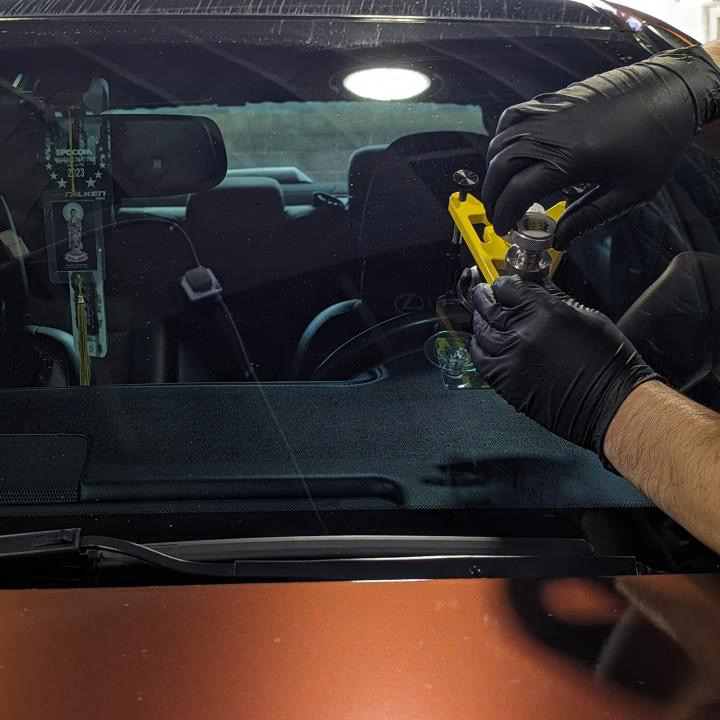
During the repair process, a technician:
Once completed, the windshield regains much of its original strength and is protected against further spreading.
One major advantage of chip repair is that there is typically little or no downtime after the service is complete.
Crack repairs generally take longer than simple chip repairs.
Depending on the length and complexity of the crack, repair times may range from:
30 minutes to 1 hour
Longer cracks require additional preparation and more resin to stabilize the damaged area.
However, not all cracks are repairable. Many repair professionals recommend replacement when cracks exceed certain lengths or begin affecting critical viewing areas.
This is why early intervention is so important. A small crack that could have been repaired in 30 minutes may eventually require a full replacement if ignored.
When repair is no longer an option, windshield replacement becomes necessary.
A typical windshield replacement takes:
60 to 90 minutes
The replacement process includes:
While the installation itself may be completed within this timeframe, the total process is not finished until the adhesive has cured sufficiently.
One of the most overlooked aspects of windshield replacement is adhesive curing time.
After installation, drivers must wait until the adhesive reaches a safe level of strength before driving the vehicle.
Typical safe drive-away times are:
The exact timeframe depends on:
Your technician should always provide a specific safe drive-away time before you leave.
Not all windshield repairs take the same amount of time. Several factors influence how long the process will take.
Larger cracks naturally require more work than small chips.
A tiny bullseye chip may take only 20 minutes to repair, while a longer crack could require an hour or more.
Multiple chips or impact points increase repair complexity.
Repairing several damaged spots takes longer than repairing a single chip.
Certain damage patterns are easier to repair than others.
Common repairable damage includes:
More complex damage patterns may require additional time or replacement.
Temperature plays a major role in windshield repair.
Extreme heat or cold can affect:
Professional technicians often use temperature-control techniques to ensure proper results.
Modern vehicles frequently include advanced safety features mounted to the windshield.
These systems may require additional procedures after replacement.
For many newer vehicles, the answer is yes.
Advanced Driver Assistance Systems (ADAS) include features such as:
When a windshield is replaced, these systems may require recalibration to function correctly.
ADAS calibration can add additional time beyond the replacement itself.
While calibration requirements vary by vehicle, it is an essential step that should never be skipped.
Mobile windshield repair services are increasingly popular because they eliminate the need to visit a repair shop.
A technician travels directly to your:
The actual repair time remains largely the same, but mobile service can save significant time by eliminating travel and waiting room delays.
However, weather conditions can affect mobile appointments. Rain or severe weather may require rescheduling unless adequate cover is available.
One of the biggest mistakes drivers make is postponing repairs.
Small chips often seem harmless at first, but several factors can cause rapid crack growth:
A repair that could have taken 20 minutes today may turn into a replacement requiring several hours tomorrow.
Prompt action not only saves time but also reduces overall repair costs.
Many drivers assume windshield repair restores the glass to a like-new appearance.
In reality, the primary goal of repair is to:
Most repairs significantly reduce the appearance of damage, but a faint blemish may remain visible.
This is completely normal and does not indicate a failed repair.
When professional-grade resin is used, a repaired windshield regains much of its original strength.
Proper repairs help:
Although no repair can reverse damage entirely, a quality repair can significantly strengthen the affected area.
Preventing damage is often easier than repairing it.
Consider the following best practices:
Road debris is one of the leading causes of windshield chips and cracks.
Maintaining a safe following distance helps reduce impact risks.
Rapid heating or cooling places stress on windshield glass.
Gradual temperature changes help minimize cracking.
Even tiny chips can become major cracks.
Early repairs are faster, cheaper, and more effective.
Loose stones and debris can easily cause impact damage.
Reducing speed and increasing following distance can help protect your windshield.
If you’re wondering, “How long does it take to fix a cracked windshield?”, the answer is usually much less time than most people expect. Minor chips and small cracks can often be repaired in under an hour, while full windshield replacements are commonly completed within a few hours, including curing time.
The most important factor is acting quickly. Windshield damage rarely improves on its own, and delaying repairs can turn a simple, affordable fix into a more expensive replacement.
By addressing chips and cracks early, you can maintain your vehicle’s safety, preserve visibility, and minimize downtime.
Whether you need a quick repair or a complete windshield replacement, prompt professional evaluation is the best way to ensure your windshield remains strong, safe, and ready for the road ahead.